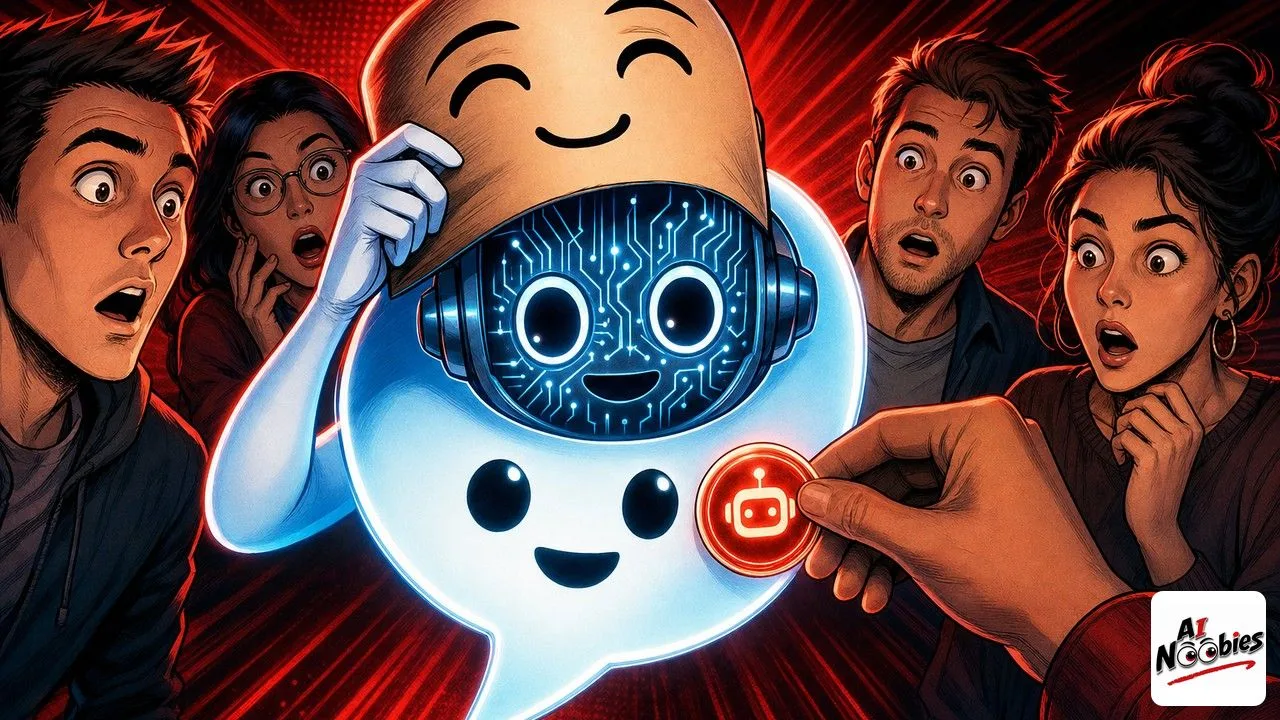
Starting August 2, a new European law says AI chatbots have to tell you when you’re talking to a machine instead of a person. If you have ever wondered whether that helpful little chat window was a real human, the answer now has to be spelled out for you.
The Gist
- A new set of EU AI rules took effect on August 2, 2026.
- Chatbots and AI assistants must now tell you they are not human.
- AI-made images, videos, and audio have to be labeled as fake.
- Hidden marks get added so software can detect AI content.
- Companies that ignore the rules can face large fines.
Have ChatGPT Recap This Article
ChatGPTWhat Just Changed for Chatbots on August 2
Europe has a big AI law called the AI Act, which is a rulebook for how companies can build and run AI. Most of it was written a while ago, but August 2 is the day the EU AI rules got real teeth, because regulators can now actually check and punish companies that break them.
The part you will notice first is about honesty. If a chatbot answers your question, it now has to make clear that you are talking to a machine, not a person hiding behind a screen.
This matters because chatbots have gotten very good at sounding human. That same worry is why the boss of the Signal app warned that AI chatbots are not really your friends, and the new rules turn that warning into something companies must follow.
How a Chatbot Now Has to Introduce Itself
The rule is simple in practice. When you start chatting with an AI, the company has to tell you up front that it is AI. Think of the little support window on a shopping site, or the assistant built into an app, that used to leave you guessing.
It covers more than customer support too. Any system that talks back to you, recommends things, or writes replies in a human’s place has to own up to being AI.
That honesty could change how much you trust these tools. Right now trust is shaky: only about one in ten people use AI chatbots regularly, and many still don’t fully trust them. Knowing for sure when you’re talking to a bot is a small step that could make people a little more comfortable.
Keep learning on AI Noobies:
- MiniMax H3 Is a New Chinese AI Video Model
- Google Earth Just Pulled Its Fake Image Tool
- Which Free AI Chatbot Wins in 2026 for Beginners
What “Deepfake” and “Watermark” Actually Mean
The rules also target fake media. A deepfake is a photo, video, or voice clip that was made or edited by AI to look real, like a video of someone saying words they never actually said. Under the new rules, that kind of content has to be labeled so you know it isn’t genuine.
There is a second, invisible layer too. AI content now has to carry a watermark you can’t see, a hidden mark that software can read to flag something as AI-made, even if a person can’t tell at a glance. The European Commission laid out these transparency requirements in its official announcement.
We have already seen platforms move in this direction on their own. When Google Earth quietly pulled a tool that made fake satellite images, it was the same instinct: keep AI-made pictures from passing as the real thing.
How to Spot the New Labels This Week
You don’t need to read the law to see it in action. Next time a chat window pops up on a website, look for a line telling you it’s an AI assistant. More and more of them will start saying it clearly.
On social media, keep an eye out for small tags marking a photo or video as AI-generated. Scrolling through your feed with that in mind is a good habit, and it trains you to pause before you believe a clip.
One thing to remember: these rules only apply in Europe for now. If you’re elsewhere, you might not see the labels yet, but big companies often roll out the same change everywhere because running two versions is more trouble than it’s worth.
Stay tuned on AI Noobies.
About the Author