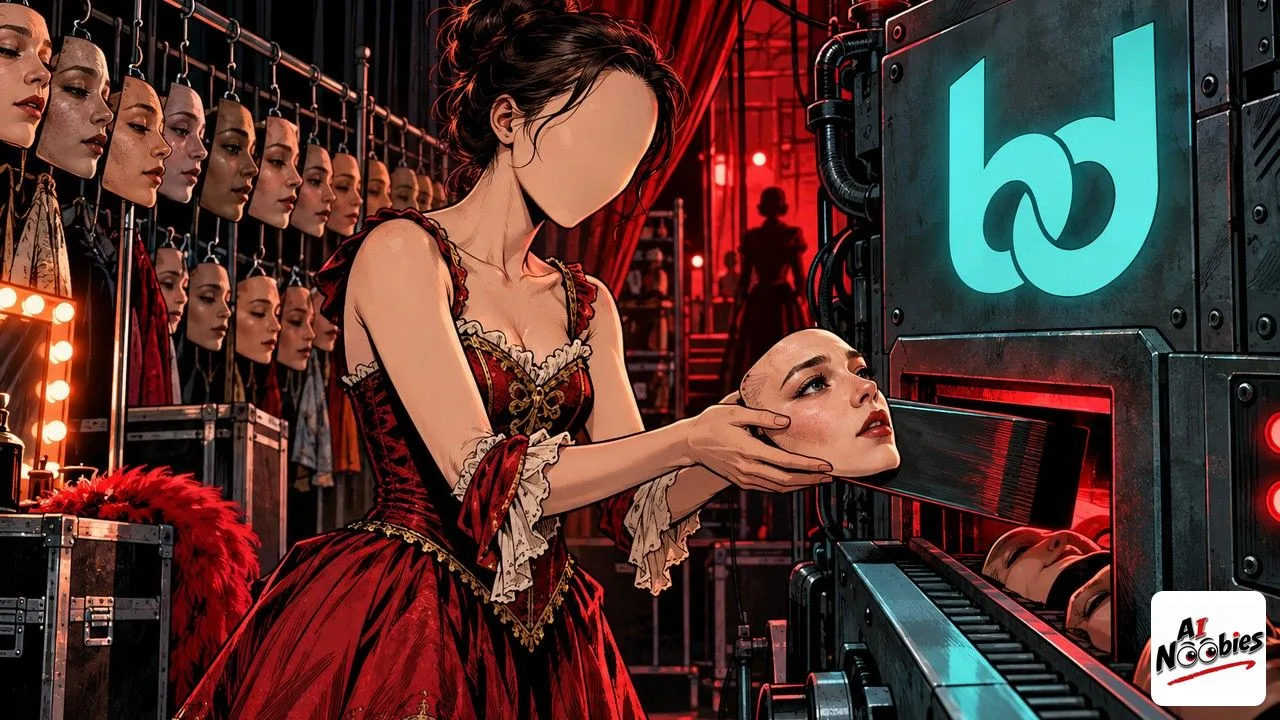
ByteDance has launched Dramagic, a platform that takes a written script and produces a finished short drama without ever switching on a camera. If you have ever scrolled past a vertical soap opera on your phone and wondered how so many of them exist, this is a large part of the answer.
The Gist
- Dramagic handles the whole production chain, from script to final video.
- China released about 128,000 short dramas in the first three months of 2026, and more than 95 % used AI.
- A minute of AI video costs 90 to 120 dollars, roughly a tenth of a filmed minute.
- Around 690,000 people work directly in that industry.
Have ChatGPT Recap This Article
ChatGPTMeet Dramagic, the factory behind the vertical soap operas
Short dramas are the vertical mini-series you meet on your phone: one or two minutes per episode, a cliffhanger every time, dozens of episodes in a row. They are enormous in China and growing everywhere else.
Dramagic is the tool that makes them. You hand it a script, and it walks through the steps a production company would normally handle, ending with a video ready to publish.
None of the individual pieces are new. Scripts, voices and video have all been generated separately for a while, as with a Google model that turns almost any input into video. What changes here is that one product now runs the whole chain end to end.
It is distributed through BytePlus, which is ByteDance’s business-facing arm. That detail matters, because this is a product sold to studios and production companies. You will never download it yourself.
The pitch to a studio is simple enough. Instead of paying several suppliers and stitching their work together, you send a script into one system and collect a publishable episode at the other end.
ByteDance is the same company behind TikTok, so it already knows precisely what keeps a thumb scrolling. Dramagic simply moves that knowledge upstream, into the making of the thing rather than its distribution.
How 95 % of China’s short dramas ended up made by AI
The numbers here are genuinely hard to picture. China put out roughly 128,000 new short dramas in the first quarter of 2026 alone, which is three times the total from the same stretch a year earlier.
More than 95 % of them used AI to get made. In other words, the filmed version has already become the exception rather than the norm in that particular corner of entertainment.
Money explains most of it. One minute of AI video runs between 90 and 120 dollars, against roughly ten times that for the same minute shot with a crew, a location and a lighting setup.
For a sense of scale, 128,000 releases in three months works out at well over a thousand new shows a day. No filmed industry on earth has ever operated at that rhythm.
That said, price explains only part of a tripling in twelve months. Speed carries the rest, because a format that lives on volume needs new episodes constantly, and a pipeline with no shooting schedule never waits for anything.
Other signs of the same shift came earlier. Video generators have been closing the gap for a while, including a Chinese video model released this summer.
Keep learning on AI Noobies:
- How to Ask ChatGPT Health Questions Without Being Misled
- What Is a Deepfake and How Can You Spot One?
- Meta Muse Calls US Businesses So You Don’t Have To
What a licensed face actually means for the person behind it
So the shift hit one format first, inside about a year, while the rest of entertainment watched from the outside.
Which brings us to the people who used to do this work. A production chain that no longer needs a set still needs something quite specific from human beings.
Here is the part that deserves your attention, because it is easy to miss. These shows still need human faces, and those faces come from somewhere.
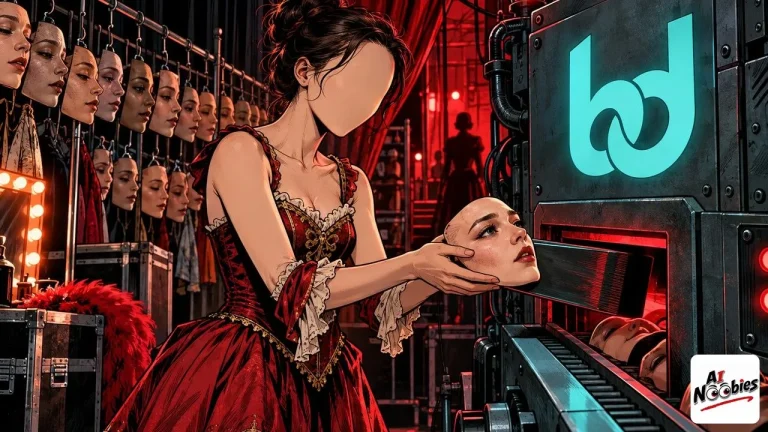
Some performers have reportedly been pushed to hand over their voice and their likeness to AI tools, and were then laid off. Their face keeps working on screen after they have stopped being paid to act.
Licensing a likeness means giving a company the right to use your face and voice to build a character. The image keeps earning money, just not for you, once the one-off payment has been made.
There is a second problem hiding underneath. A face that has been licensed can be made to say things the person never said, in a story they never agreed to, and the contract signed at the start rarely covers that.
The scale of who this touches is the striking figure. Around 690,000 people work directly in short drama production in China, from actors to camera operators to editors, and the whole chain sits in the path of this change.
Zooming out, this is the question that will keep landing in the news around you. Not whether AI video looks convincing, which it increasingly does, but who owns a face once it has been scanned, and what happens to the person attached to it.
How to spot an AI short drama on your own feed
You can test this yourself tonight, and it takes about ten minutes. Open the short video app you already use and scroll until you hit one of those vertical mini-series with a dramatic hook.
Watch the background rather than the actors. AI video still struggles with things happening behind the main subject: a hand that changes shape, a door frame that shifts, writing on a wall that will not stay the same between two shots.
One more tell is the pacing of the cuts. Generated scenes are often built shot by shot in short bursts, so the edit can feel oddly regular, with every shot running almost exactly as long as the one before it.
Then listen to the mouths. Dubbing and generated voices often drift very slightly out of sync with the lips, which your ear picks up as something being a bit off before your eye works out why.
Feature films are heading the same way, with a well-known director having already shot an entire AI movie. The short format simply got there first, because nobody expected it to look expensive in the first place.
Stay tuned on AI Noobies.
About the Author