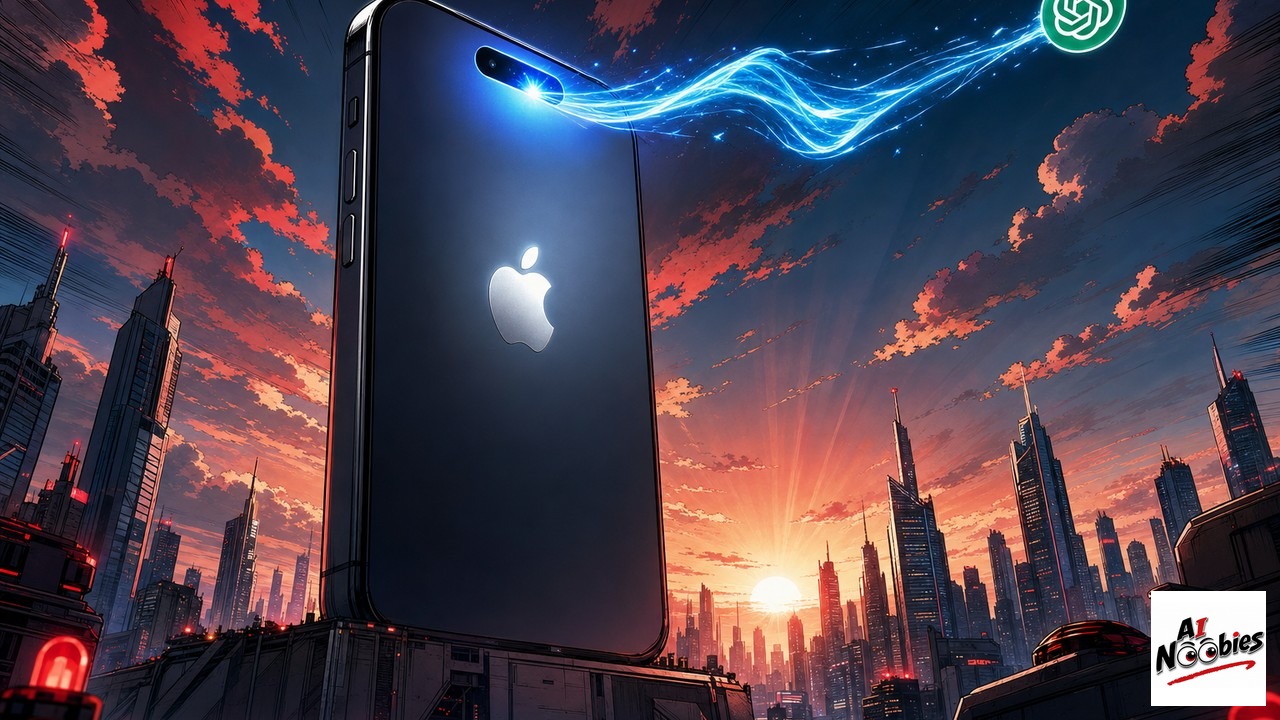
Apple is rebuilding Siri from the ground up for iOS 27. A dedicated Siri app is on its way, powered by Google’s AI engine and Apple’s own private on-device models. With 2.5 billion Apple devices already in people’s pockets, this could quietly become the biggest AI rollout in history.
The Gist
- Siri for iOS 27 gets its own standalone app with chat history, document uploads, and photo analysis
- Apple is using Google’s Gemini AI as the main engine, paired with private on-device AI that keeps your data on your phone
- Apple’s 2.5 billion device install base dwarfs ChatGPT’s 900 million weekly users
What’s Actually Changing with Siri in iOS 27
The biggest change is something you’ll feel the moment you pick up your phone. When you activate Siri, the Dynamic Island (the small pill-shaped cutout at the top of your iPhone screen) will light up and respond to your voice directly from there. No more white ball rolling at the bottom of the screen. Siri becomes part of the phone’s hardware identity.
The second change is how you search. Swiping down on your iPhone currently opens Spotlight Search, a basic tool that finds apps and files. In iOS 27, that swipe opens an AI-powered Siri search instead. You type a question, Siri understands what you mean and gives you a real answer, complete with cards, images, and direct actions.
Then there’s the standalone Siri app. This is Apple’s direct shot at ChatGPT. The app will keep a full history of your conversations, let you upload documents, analyze photos, and handle complex multi-step questions. It functions like a personal assistant you can actually have a real conversation with. You can ask it to search your notes, draft a message, check your calendar, and get a flight update all in one thread.
Under the hood, Apple is combining two different AI systems. Google’s Gemini (an advanced AI model, the same type of technology that powers ChatGPT) handles the complex, demanding requests. Apple’s own smaller AI models, which run directly on your device without sending anything to external servers, handle the simpler everyday tasks.
This split is deliberate. For private requests like searching your messages or reading your notes, your data stays on your phone. For heavy-duty questions that need more AI power, the request goes to Google’s servers. Apple is betting that this balance between privacy and capability is exactly what mainstream users want.

Apple’s Secret Weapon: 2.5 Billion Devices Already in Pockets
Here’s the number that matters more than any feature list. Apple has a 2.5 billion device install base across iPhones, iPads, and Macs. ChatGPT, the current leader in AI tools for regular users, has 900 million weekly active users. Apple doesn’t need to convince anyone to download a new app. It just needs to ship an iOS update.
That’s a fundamentally different game. ChatGPT had to build its user base from scratch, one download at a time. Apple can reach billions of people the moment iOS 27 drops. The real competition isn’t about who has the best AI: it’s about who gets there first in the places people already spend their time.
Apple is expected to officially announce iOS 27 at its annual WWDC developer conference in June 2026. If the timeline holds, the update would roll out to compatible iPhones later this year. That means by the end of 2026, hundreds of millions of people could have access to a capable AI assistant without knowing they installed anything.
There’s also the privacy angle, which Apple has always used as a differentiator. Competitor AI apps typically send your conversations to company servers to process them. Apple’s on-device approach for private tasks is a genuine distinction for users who are uncomfortable with that trade-off. If you ask Siri something that involves your personal messages or health data, it stays on your phone.
Other AI assistant apps are already making their moves. Sesame AI, from the founders of Oculus, launched its own iOS app with four distinct AI personalities and real-time information access, aiming for a different kind of AI companion experience. The market for conversational AI apps on your phone is getting crowded fast, and Apple entering this space changes the stakes for everyone.
How iOS 27 Siri will show up in your daily use
In the short term, the most immediate change is that Siri will finally feel useful for things beyond setting timers and sending texts. You’ll be able to ask it to draft an email based on a photo of handwritten notes, summarize a document you just received, or find a specific thing someone said in a message from three months ago. These are tasks people currently open separate apps to handle.
For people who have never used ChatGPT or any AI tool, iOS 27 Siri will likely be their first real experience with conversational AI. This matters. The first impression shapes how people understand and relate to AI tools in general. Apple has enormous influence over what “normal people” think AI is capable of doing.
Over the medium term, the way we interact with our phones will shift. Right now, using your phone means opening an app, navigating to what you want, and doing a thing. With a capable AI layer across the whole device, you’ll increasingly just ask for what you want and let the phone figure out how to get it. The app grid becomes less important, the AI layer becomes more important.
This shift will also accelerate pressure on app developers. If Siri can summarize a news article, search a restaurant’s menu, and make a reservation without opening three different apps, those apps have a problem. Apple is slowly turning every iPhone into a single AI-powered interface to everything, and that has consequences well beyond just Siri.
For you, right now, there’s nothing to do except keep an eye on the WWDC announcement in June. The real test will be whether Apple’s rebuilt Siri is genuinely useful in daily life, or whether it ends up as another feature that sounds impressive in a keynote and frustrating in practice. History suggests Apple gets these moments right about half the time.
Follow the story on AI Noobies.
About the Author