Suno, the app that turns a sentence into a finished song, is about to start marking every track it produces so platforms can tell it was made by AI. The same update caps how many songs you can export at once and tightens what you are allowed to ask for.
The Gist
- Suno will add an inaudible audio watermark plus fingerprinting to the songs it generates.
- New download limits are meant to stop people from mass-uploading generated tracks to streaming services.
- Community rules now explicitly ban copying an existing song or using someone’s voice without permission.
- The changes land while Suno is fighting copyright cases in Germany and the United States.
Have ChatGPT Recap This Article
ChatGPTMeet Suno, the app that builds a song out of one sentence
Suno is a music generator. You type a description, something like a soft piano ballad about moving out of your childhood home, and a couple of minutes later you have a full track with vocals, lyrics and instruments.
That simplicity is exactly what made it explode. Millions of songs now exist that nobody performed, and a good number of them ended up uploaded to streaming platforms alongside human recordings.
Streaming services were left with an awkward problem. They had no reliable way to tell a generated track from a recorded one, which is the same gap that pushed one platform to build its own detector, as we covered when Deezer started flagging AI music sitting on Spotify and Apple too.
Suno’s answer is to label its own output at the source rather than wait for someone else to guess. The company laid out the plan in a post about building music responsibly, and the labelling is the centrepiece of it.
How a watermark hides inside a piece of music
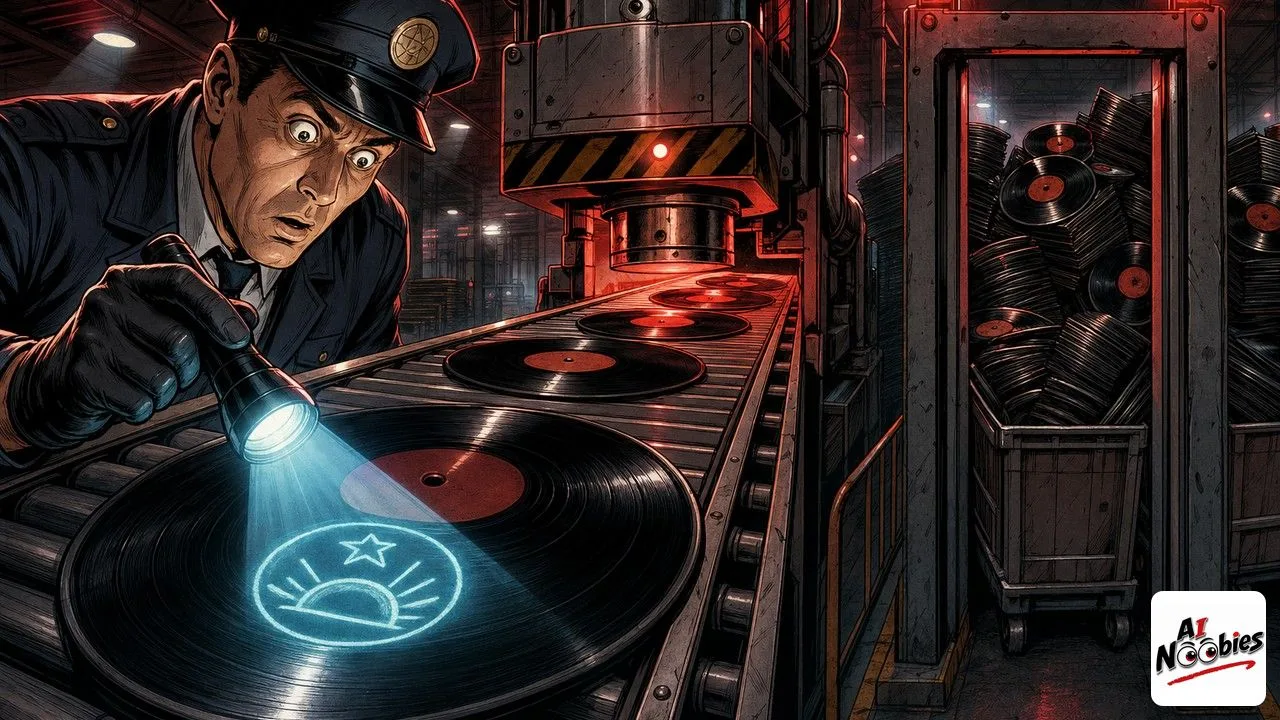
A watermark on a photo is the faded logo you can see in the corner. An audio watermark works differently: it is a pattern buried in the sound itself, designed so your ears never notice it while software can still read it.
Suno is pairing that with fingerprinting, which is a second, separate trick. Fingerprinting takes a mathematical summary of how a track actually sounds, so it can be recognised later even if someone re-records it, trims it or converts the file.
Put together, the two give platforms a way to trace a song back to where it was made. A streaming service will be able to tell that a track came out of Suno without needing the uploader to admit it.
The company also signed an agreement with lyrics provider Musixmatch to use its Sentinel system, which checks lyrics against copyrighted material. Audio and lyrics uploaded to the platform get scanned for rights violations through partners including Audible Magic.
Keep learning on AI Noobies:
- Delete ChatGPT Memory: See and Erase What It Knows
- Google Maps Can Now Order Your Food and Book Hotels
- ChatGPT Free Gets Unlimited Chats and a Weaker Model
What the download limits and the new rules cover
The second change is more likely to touch you directly. Suno is restricting bulk exports, meaning you can no longer pull hundreds of finished songs out of the platform in one go.
The target is not the person making a birthday song for their mother. It is the operations that generate tracks at industrial scale and flood streaming catalogues with them to collect small royalty payments, which is the behaviour the company describes as large-scale abuse.
The community guidelines got firmer at the same time. Replicating an existing song, uploading material you do not own, using someone’s voice or likeness without permission, spam, fake engagement and passing generated audio off as an authentic recording are all now spelled out as banned.
On the training side, Suno leans on an approach it calls Original Creation, By Design. Artist names were deliberately left out of the metadata used to train the model, and prompts naming a specific artist or song were never allowed in the first place.
Rivals are moving on the same ground with different priorities. One competing model went the other way and focused on control instead of labelling, letting you fix a single part of a song without regenerating the whole thing, which tells you the market has not settled on what matters most yet.
How to check where your own tracks stand this week
Start with the practical question: what do you actually do with the songs you generate? If they stay in your phone, a birthday clip or a background loop for a family video, none of this changes your afternoon.
If you upload them anywhere public, the watermark now travels with them. That means a platform can identify the track as generated, and it may treat it differently in recommendations or in how it pays out, so it is worth reading the upload rules of wherever you post.
Zooming out, the wider argument this feeds is about disclosure. Suno is committing to features that identify its AI-generated tracks using emerging industry standards, which is the same debate now running through images and text: should you always be told when a machine made the thing you are looking at?
The legal backdrop explains the timing. A German court ruled that Suno used copyrighted material in training and can reproduce it when prompted the right way, Universal Music and Sony are suing in the United States, and Warner settled and now runs an opt-in scheme for its artists.
That pressure is not unique to music. The publishing side went through the same reckoning when an AI company agreed to pay authors for books used in training, and the pattern repeats: build first, settle later, add labels once the courts get involved.
A good experiment for the week is to generate one short track, then read the terms of the first platform you would have posted it to. Knowing whether that platform wants generated music labelled, tolerated or kept out entirely tells you more about your options than any feature announcement will.
Stay tuned on AI Noobies.
About the Author