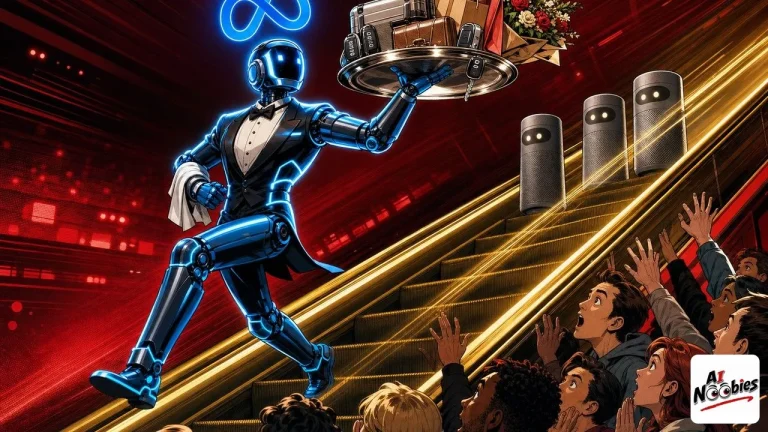
Dawn Song, a star AI researcher, just joined Meta. Her message: forget the next chatbot upgrade, the real game is AI agents that finish actual work. Here is what that means for you.
The Gist
- Dawn Song is leaving UC Berkeley to lead AI research at Meta’s Superintelligence Labs.
- She thinks AI agents (small AIs that do tasks for you) are the next big step in AI.
- The goal is not to replace humans but to make these agents actually useful at work.
Have ChatGPT Recap This Article
ChatGPTWho is Dawn Song and why this matters
Dawn Song is a computer science professor at UC Berkeley, one of the top AI universities in the world. She co-directs a research center on responsible AI, and she co-founded a startup called Virtue AI that helps companies use AI safely. She is now joining Meta as VP of AI Research at Superintelligence Labs.
For Meta, this is a big catch. Mark Zuckerberg has been rebuilding the company’s AI team for months, after a series of poached hires and the multi-billion dollar deal for Scale AI. Adding a respected academic like Dawn Song signals that Meta wants serious, careful research, not just hype.
A piece of her Virtue AI team is following her to Meta. That matters because building agents safely is hard, and having a team that has already done it together gives Meta a faster start than hiring people one by one.
Dawn Song spoke at the World Economic Forum in Dalian, China, in late June. She laid out her view of where AI is going. That talk became her unofficial Meta introduction, and the AI world has been reading it closely ever since.
For Meta, the bet is clear. The company wants to catch up with OpenAI and Google by building AI tools that companies actually pay for, not just impressive demos. Dawn Song is the person they hired to make that real. Her timing aligns with Meta’s recent push around Hatch, the $200 monthly AI agent Meta launched for everyday tasks.
What she actually said about agents
An AI agent is a piece of AI that does things for you instead of just answering questions. Think of asking ChatGPT to plan your trip versus an AI that actually books the flights, the hotel, and adds them to your calendar. The second one is an agent.
In Dalian, Dawn Song was clear about her vision. The goal is not to replace humans. The goal is to make AI agents more effective at real-world work that produces real economic value. That last part matters. She is not promising AI that wins benchmarks. She is promising AI that actually closes work.
Her UC Berkeley center recently launched a new test called Agents’ Last Exam (ALE). It measures how well AI agents handle more than 1,500 real tasks across 55 different industries. Not toy problems. Actual work that someone, somewhere, pays money to get done.
This test changes the conversation. For years, AI labs have bragged about beating exam scores and logic puzzles. But those scores do not tell you whether the AI can do your job. ALE tries to answer that question directly.
The reality check is brutal. Independent studies show that today’s agents finish only 14% of real-world web tasks. That is far from ready. Dawn Song is signing up to push that number toward a level where companies can actually replace some workflows.
Keep learning on AI Noobies:
- AI Agents Reality Check: 14% of Real Tasks Done
- Anthropic Mythos: 100 Companies Get Trump’s Green Light
- GPT-5.6: White House Picks Who Gets It First
How Meta’s Agent Push Will Reach Your Workflow
In the short term, expect Meta to launch new AI agent tools aimed at companies, not consumers. The next few weeks should bring announcements that target office workers, customer support, marketing, and similar fields. Whether you use Meta products at work or not, the bar for what an AI agent can do is about to rise.
If you work in tech, design, marketing, or operations, this affects you directly. The agents that come out of Dawn Song’s team will be aimed at tasks that look like yours. The promise is that they handle the boring parts, not your entire role. The reality will depend on how good the agents actually become.
Over the next three to six months, watch what Meta ships. The agents that finish tasks correctly will sell. The ones that make embarrassing mistakes will get pulled. The Agents’ Last Exam scores will become a real shopping criteria for company buyers, like crash test scores for cars.
For regular users, the effect will be slower. Most of what Dawn Song is building is for the enterprise side, where the budgets are. But the technology trickles down. The same agents that handle expense reports today will end up helping you book a doctor’s appointment tomorrow.
One thing to watch out for. The more an AI agent does for you, the more trust you need to give it. Dawn Song’s track record on AI safety is exactly why Meta picked her. Whether her team can actually build agents that are both useful and safe is the question that decides if this push works.
Stay tuned on AI Noobies.
About the Author