Long PDFs are the reason most beginners give up on their AI subscription. A contract, a manual, a research paper, a company deck: too dense to skim, too painful to read. ChatGPT reads them for you in under a minute and returns exactly what you asked for. Here is the beginner-proof method.
The Gist
- ChatGPT reads full PDFs directly, no copy-paste, on the free tier and above
- The magic is in the question you ask, not in the PDF size
- Best first uses: contract review, meeting prep, research summary, technical manuals
Have ChatGPT Recap This Article
ChatGPTWhy 100-Page PDFs Beat Most Beginners
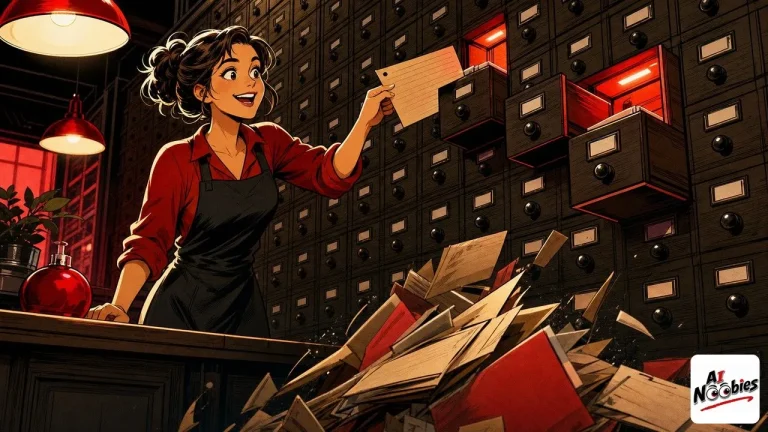
Reading a long PDF is a job with two very different parts. The first is skimming the whole thing to know where the answer might be. The second is finding the actual sentences that answer your question. Both take time, and both are exactly what a language model does faster than you.
A beginner usually gets stuck because they treat ChatGPT like a search bar. They upload the PDF, ask “what is this about?”, get a generic three-line summary, and quit. The problem is the question, not the model. A vague question gets a vague answer, even from a smart AI.
The technical piece to understand is context length. That is the amount of text a model can hold in its head at once. Modern versions of ChatGPT handle full 100-page PDFs comfortably (roughly 50,000 to 100,000 words depending on formatting). If your document is longer, the model still works but you may want to feed it in parts.
There is one exception: PDFs that are scans of paper, not real digital text. In that case the file is essentially an image. ChatGPT will still try to read it, and the answer quality depends on how clean the scan is. For messy scans, a proper OCR step first (turning images into text) improves everything downstream.
The good news for beginners: you almost never have to worry about any of this. On a normal digital PDF, you drop the file in and ask. The only skill to learn is the question. That skill sits at the same level as our advice on writing a prompt that actually works, and it is the same discipline.
The Setup in Three Clicks and One Sentence
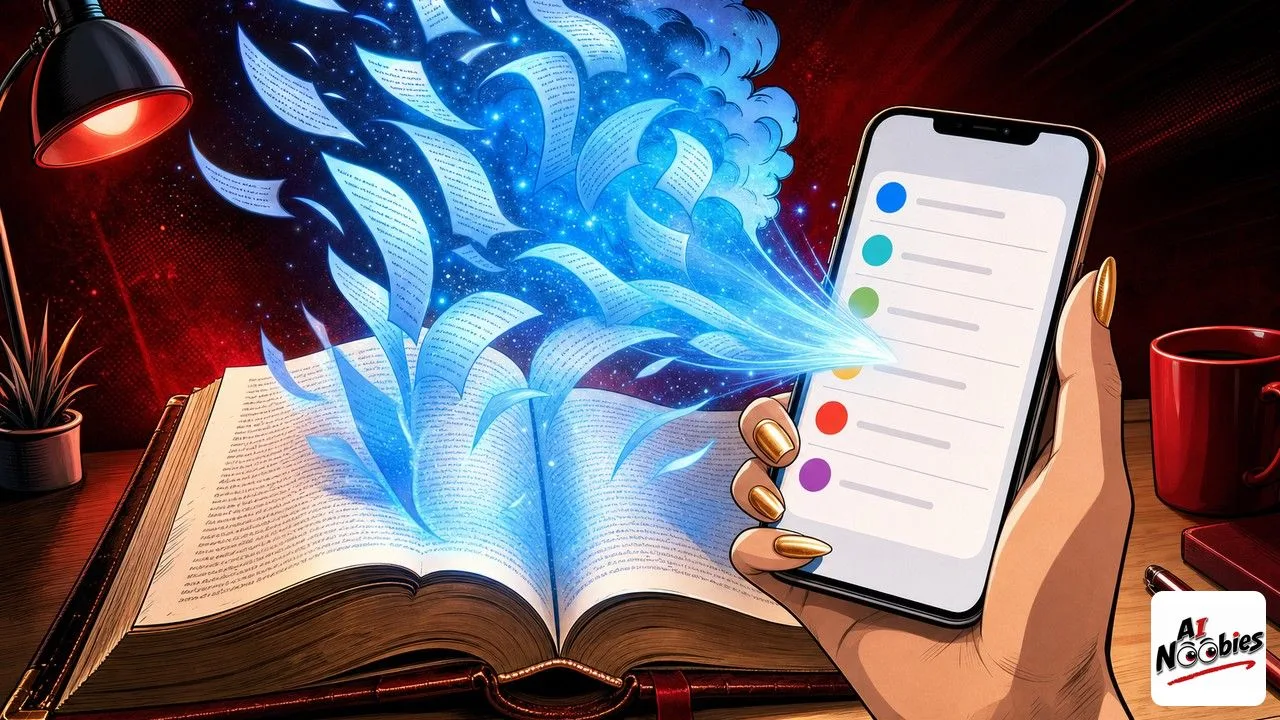
Open ChatGPT. In the message box, click the paperclip icon (or drag your PDF into the chat window). The file uploads in a few seconds and ChatGPT confirms it can see it. No account setting to change, no plugin to install. This works on the free tier for standard-size files.
Now the question. This is where beginners win or lose. A useful pattern: state who you are, why you are reading this document, and what you need to leave the document with. Three lines is enough. Example: “I am a marketing manager. I need to sign a vendor contract this week. List every clause where I am financially exposed and every automatic renewal condition.”
ChatGPT reads the 100 pages, extracts what you asked for, and produces a structured answer with the section numbers or page numbers where it found each item. You can then ask follow-up questions: “give me the exact quote for clause 7.2”, “explain the termination window in plain English”, “what would you push back on if you were me”.
If you plan to do this every week, you can save time even further by giving ChatGPT access to your inbox. Our guide on plugging ChatGPT into Gmail covers that setup. Once linked, you can email yourself a PDF and ask ChatGPT to prepare the summary before you even open the file.
One warning: language models can misread numbers, dates or names, especially in tables. Always verify anything you are going to sign, quote to a client, or use as a decision input. This is the same reflex we build for spotting ChatGPT hallucinations in general use. Trust the model to save you time, not to make the final call.
Keep learning on AI Noobies:
- Copilot AutoPilot Explained: What AI Agents Really Do
- Claude vs ChatGPT vs Gemini: Which One for You?
- Connect ChatGPT to Gmail: Your First Automation
Four Real Use Cases That Change Your Week
The first case is contract review. Drop a vendor or freelance contract, ask for financial exposure, renewal clauses and unusual liability terms. Five minutes of ChatGPT beats an hour of skimming, and it flags the exact clauses you should read line by line yourself before signing.
The second case is meeting prep from a company deck or annual report. Ask for the top three financial numbers, the top three strategic moves of the last year, and any recent leadership change. You walk into the meeting knowing more than you would have from reading the deck cover to cover.
The third case is research or study material. Drop a scientific paper, a long article, a chapter of a textbook. Ask for a summary at your level of expertise, then follow up on the parts you did not understand. It turns a two-hour reading session into a targeted twenty-minute conversation.
The fourth case is technical manuals. User guides, software documentation, insurance policies: any long document where you need one specific answer among hundreds of pages. Ask a direct question and ChatGPT jumps straight to the relevant paragraph. This one alone saves entire afternoons for a beginner learning a new tool.
A last tip that beginners rarely use: ask for a table of contents. Before you dive into the PDF, get ChatGPT to produce a two-line summary per section. You decide what deserves a full read and what deserves nothing. The document you thought you had to read straight through gets triaged in three minutes.
The habit compounds. Once you have run the trick on a dozen PDFs, you stop dreading long documents. You start opening more of them, because the cost of processing dropped. That shift is often the moment a beginner realizes AI is not a demo trick, it is a genuine productivity change.
Stay tuned on AI Noobies.
About the Author