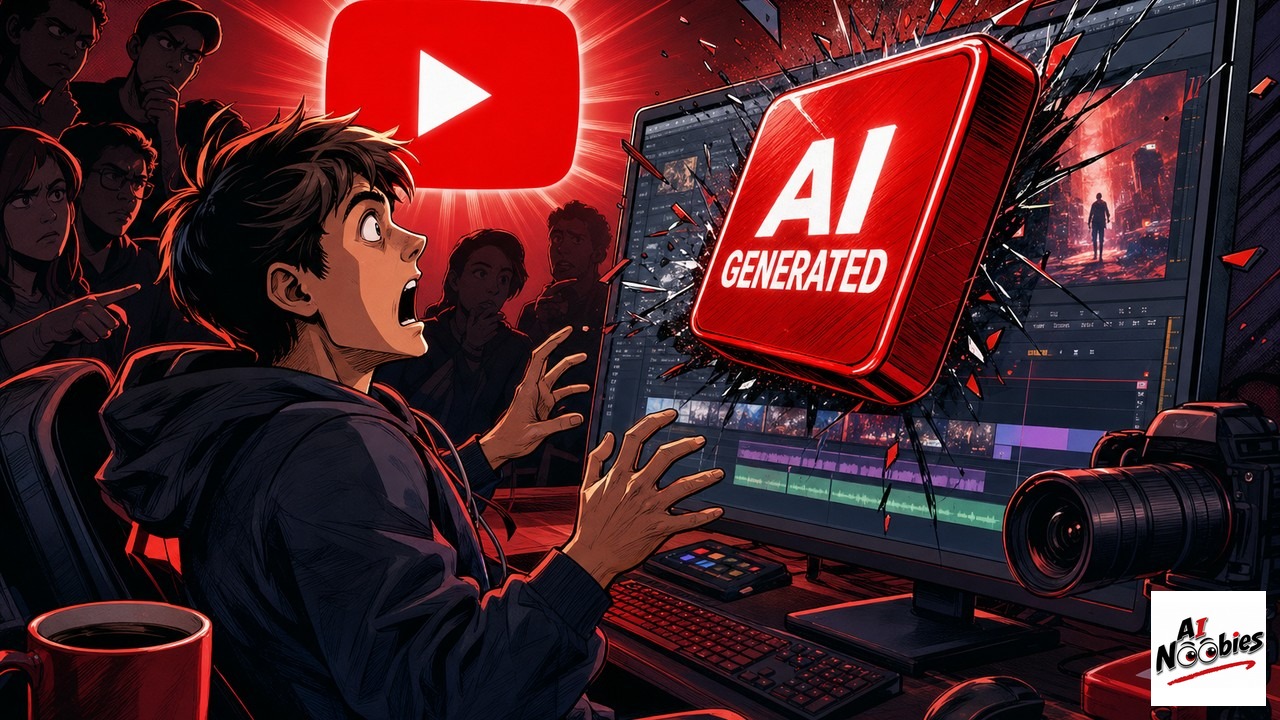
YouTube is no longer waiting for creators to be honest about AI content. Starting May 2026, the platform automatically detects videos made with AI and stamps them with a visible label. Whether you’re a viewer or a creator, this changes how you interact with every video on the platform.
The Gist
- YouTube now automatically detects and labels AI-generated or AI-altered videos, no longer relying only on creator disclosure.
- Labels appear prominently below the video player, not buried in the description where most people never look.
- AI labels have no effect on how YouTube recommends videos or whether creators earn money.
What’s Actually Changing on YouTube
Until now, YouTube’s policy on AI content worked on trust. If you created a video using AI tools that could “be mistaken for a real person, place, or event,” you were supposed to disclose it yourself. A checkbox in the upload process, a note in the description. Most creators either forgot or ignored it.
That era is over. YouTube’s internal systems now scan videos to identify AI-generated or AI-altered content automatically. The platform calls this targeting “significant photorealistic AI.” When it finds it, a label appears. No creator approval required.
The label placement also changed. Before, disclosures were buried in expandable descriptions that most viewers never open. Now, labels appear directly below the video player on long-form content, and overlay the video itself on YouTube Shorts. You’ll see them whether you’re looking for them or not.
There’s one group of creators who can’t remove labels at all: those who use YouTube’s own AI creation tools like Veo or Dream Screen. If the platform’s tools made it, the platform’s badge stays. For everyone else, creators can flag a misidentification and request a review.
Subtle AI edits (color correction, background removal, voice cleanup) still only get labeled in the description. The prominent treatment is reserved for content where the AI involvement is significant: cloned voices, generated faces, fabricated scenes.
How YouTube Knows Your Video Was Made With AI
The technical side of this involves two methods working together. The first is metadata. Some AI tools automatically embed a kind of digital fingerprint in the files they generate. This fingerprint, called C2PA metadata (Content Credentials and Provenance for AI), signals that the content was machine-made. When YouTube sees this, a permanent label goes on the video and cannot be removed.
The second method is detection. YouTube’s AI systems analyze the video itself for signs of machine generation: patterns in how faces move, how voices sound, how backgrounds render. This is the same general category of technology as deepfake detection software, trained to spot what the human eye might miss.
Neither method is perfect. Detection can produce false positives (labeling human content as AI) and false negatives (missing AI content). This is exactly why YouTube kept the creator override for misidentifications. A fully automated system with no appeal process would create too many problems.
YouTube’s policy itself hasn’t changed. The two-year-old rule about disclosing AI content that could mislead viewers is still the standard. What changed is enforcement. YouTube went from trusting creators to verify themselves to doing the verification independently.
This is part of a broader industry pattern. As AI tools become more accessible, the gap between AI-generated content and human-produced content narrows. The only way to maintain trust is to make the distinction visible before viewers have to ask.
What This Means for You, Whether You Create or Just Watch
If you only watch YouTube, the change is simple: you’ll start seeing small badges on content that was made or significantly altered by AI. Think of it like a nutrition label. The food doesn’t change. You just know more about what’s in it.
For creators who use AI tools, the practical impact is limited. YouTube confirmed that AI labels don’t change how the algorithm recommends your content. They don’t affect your eligibility for monetization. Your videos won’t be buried or penalized because they were made with AI assistance.
What might change is viewer behavior. Once AI labels become a standard part of the interface, viewers will develop their own responses to them. Some will see a label and trust the content less. Others won’t care. Over the next six to twelve months, we’ll find out whether transparency actually affects engagement on AI-made videos at scale.
The long-term stakes are bigger than YouTube. If automatic AI labeling becomes the norm on video platforms, the same pressure will extend to images, audio, and text. Every major platform is watching how YouTube’s rollout plays out.
For now, the most important thing to know is this: YouTube isn’t banning AI content. It’s making it visible. What viewers and creators do with that visibility is the story that’s just beginning.
Follow the story on AI Noobies.
About the Author