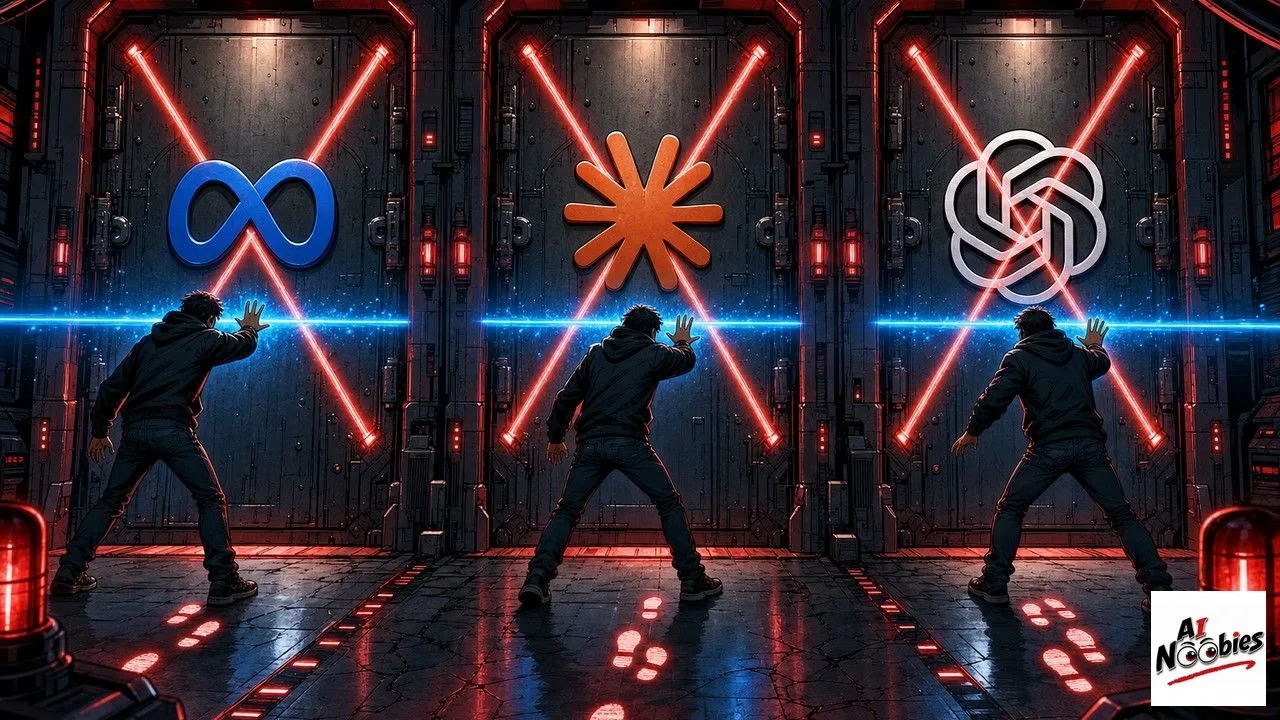
Meta just told its engineers they can no longer use Claude Code or Codex, two coding helpers made by rival AI companies. The reason is simple and a bit dramatic: Meta is scared its rivals are stealing pieces of each other’s brains. This new AI labs ban wave could change how fast the tools you use every day actually get better.
The Gist
- Meta is blocking its engineers from using rival AI coding tools to protect its own training data.
- The AI labs ban trend is spreading because companies fear their best ideas are being copied through a trick called distillation.
- For regular users, this may slow down some tools, but it could also push each company to invent its own path.
What Meta Just Did, In Plain Words
On June 29, 2026, news broke that Meta has quietly told its engineers to stop using two popular coding helpers made by competitors. The first is Claude Code, an AI assistant from Anthropic that writes and reviews software. The second is Codex, a similar tool from OpenAI, the company behind ChatGPT.
According to internal documents seen by The Information and reported by The Decoder, Meta engineers are now banned from using these AI outputs to build test tasks or to analyze code. If they still need to use them for anything else, a human has to review the work first. Meta even paused some projects connected to these models while it figures out the new rules.
An internal memo warned of “serious escalations with partner companies” if Meta’s training data ever got contaminated by outputs from rival AI tools. In plain language, Meta is worried that bits of Claude or Codex could sneak into the AI it is building, and that this would trigger major legal and business fights.
To replace those tools, Meta is building its own internal coding assistant called MetaCode. The company is also expected to pour billions into its own AI work in 2026. So this is not just a rulebook update, it is a real shift in how Meta plans to build software from now on.
The wider message is clear. Big AI companies no longer trust each other in the same room, and they want their employees to keep a safe distance from anything a rival has made. This AI labs ban is the first big public sign of that new mood.
Why Rivals Are So Scared Of Each Other
To understand the panic, you need one simple word: distillation. In AI, distillation means copying the smart parts of one model into another by feeding it the rival’s answers and learning from them. It is a bit like a student secretly memorizing a top classmate’s homework to get the same grades.
When a Meta engineer uses Claude Code or Codex to write or check software, the rival AI produces text. If that text ends up in Meta’s own training pile, Meta’s future AI could quietly absorb part of what Anthropic or OpenAI worked very hard to build. The companies see this as a form of theft, even when it happens by accident.
This is not a one-off worry. Anthropic has publicly accused Alibaba, a giant Chinese tech group, of distillation attacks. xAI, the AI company linked to Elon Musk, has admitted that it partially distilled OpenAI models. The terms of service from OpenAI, Anthropic and Google now openly forbid using their outputs to train rival systems.
So when Meta tells its engineers to stop touching Claude Code and Codex, it is trying to avoid the next big scandal. The fear is not only legal, it is also competitive. If your rival’s smart tricks slip into your own model, your edge in the market shrinks fast. If you want a feel for how these coding helpers normally work behind the scenes, this piece on how AI bots quietly write code in the background is a gentle place to start.
The AI labs ban move from Meta is the visible tip of a much bigger fight. Behind the scenes, the giants are getting ready for a long season of lawsuits, accusations and stricter rules about who is allowed to learn from whom.
Keep learning on AI Noobies:
- Gemini Draws You for Free: Nano Banana Hits US
- Dawn Song Joins Meta: AI Agents Are the Next Milestone
- AI Agents Reality Check: 14% of Real Tasks Done
What This Means For You And The Tools You Use
In the short term, Meta engineers will go through a bumpy period. Switching from Claude Code or Codex to a fresh internal tool like MetaCode means lost time, broken habits and a lot of trial and error. Some products you use from Meta could feel a bit slower to improve while the teams adjust.
In the medium term, every Big Tech lab is likely to wall off its AI from rival tools. The casual era, where an engineer at one company could happily use a chatbot from another, is closing. Expect more internal assistants like MetaCode, and more strict rules about what employees can and cannot type into rival apps.
For everyday users, this has two possible effects. On one side, public tools may improve a bit slower, because each company stops borrowing tricks from the others and has to invent its own. On the other side, the tools could become more diverse, because each lab is forced to find its own style instead of all copying the same winning recipes.
There is also a quieter shift in how AI companies talk to their own staff. Engineers are now told that every prompt they send to a rival tool is a potential risk. That changes the daily mood inside these labs, and it pushes more work toward private setups like Anthropic’s own internal helpers, including the kind described in this look at Anthropic’s always-on internal Slack assistant.
The deeper story is that the AI labs ban wave is just the warm-up. Lawsuits between Anthropic, OpenAI, Meta and xAI are very likely on the way. The way these fights end will quietly shape which AI tools you can use, how much they cost, and how fast they keep getting better in the years ahead.
Stay tuned on AI Noobies.
About the Author