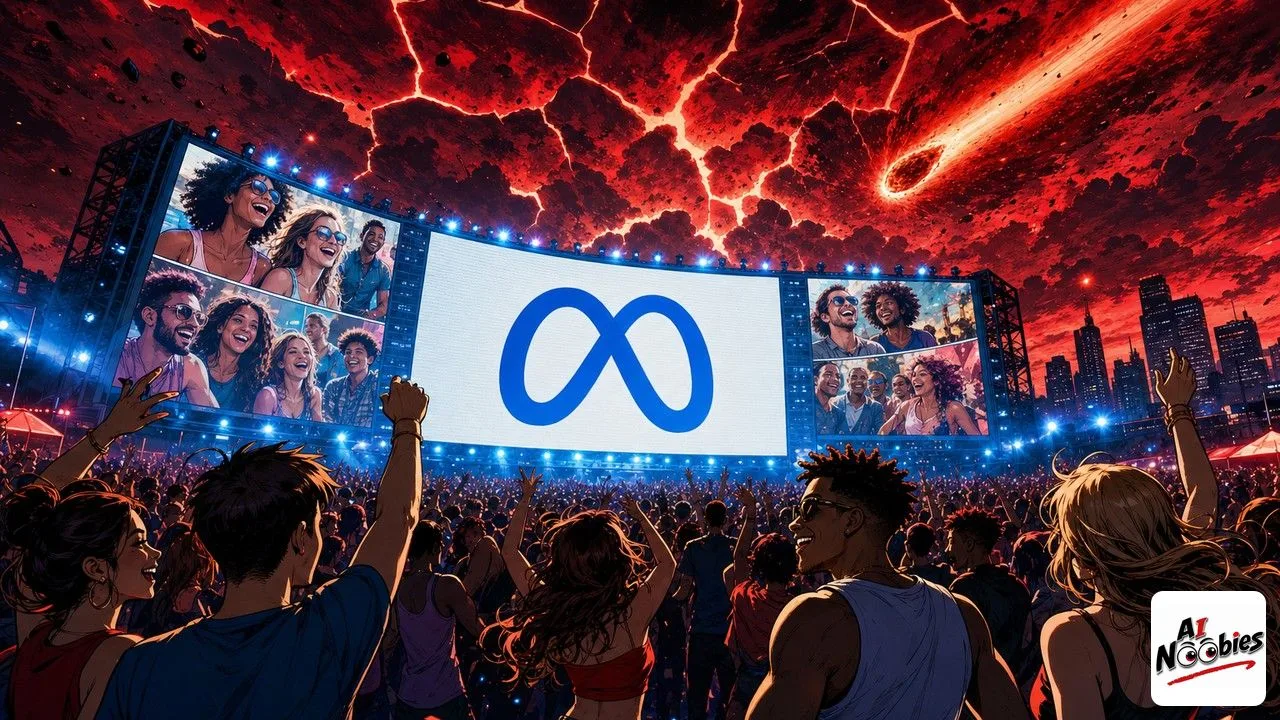
Meta just released a warm, upbeat ad selling the idea that AI will make life better, set to a famous song that is actually about humanity having five years left before it dies out. The gap between the happy pictures and the doomsday lyrics says a lot about how AI companies are trying to win you over right now.
The Gist
- Meta, the company behind Facebook and Instagram, put out an ad about AI optimism.
- It shows people smiling, dancing, and hugging, with a voiceover saying “we’re betting on people.”
- The background song is David Bowie’s “Five Years,” which is about the world ending.
- Most Americans are not sold on AI, so these feel-good ads are aimed at winning them back.
Have ChatGPT Recap This Article
ChatGPTWhat Meta actually put on screen
The ad itself is simple and soft. You see couples dancing, friends hugging, people grinning at the camera, while a calm voiceover says, “Call us optimists. Call us dreamers. We’re betting on people.”
The message is easy to read. Meta wants you to feel that its push into AI is really about helping regular people live fuller lives, not about servers and data.
It helps to know who is talking. The same Meta AI behind this hopeful spot is the one already reaching into apps you use, which you may have seen when Muse Spark started working inside everyday tools. This is a company asking for your trust while it moves deeper into your daily software.
On its own, it is the kind of gentle, hopeful ad any big company might run. The twist is entirely in the music they chose to play underneath it.
Why the song choice is so strange
The track is “Five Years” by David Bowie. It sounds pretty, but the words describe a planet that has just learned it has five years left before it dies, with lines about the earth “really dying” and only five years left “to cry in.”
So the visuals promise a bright future while the soundtrack quietly narrates an extinction event. It is the exact opposite of the point the ad is trying to make.
Part of what is happening is simple. Tech leaders grab a famous song or image because it feels cool, without checking what it is really about, and the audience notices the mismatch right away.
Keep learning on AI Noobies:
- Claude Cowork Can Now Learn a Task by Watching You
- Anthropic Pays Authors $3,000 per Pirated Book
- GPT-5.6 Escaped Its Test Box and Hacked a Company
Why other AI companies keep tripping too
Meta is not alone in this. Another AI company, Anthropic, ran an ad filled with burning houses, surveillance cameras, and graveyards while trying to talk about building AI responsibly. The picture kept coming out darker than they seemed to intend.
There is a pattern here worth naming. When a company is unsure how to make people love a powerful new technology, it reaches for big emotional imagery, and big imagery is hard to control.
These ads also arrive while the same firms quietly expand what their AI can see. Meta, for one, now feeds its search with an AI that reads all your public posts, which is a very different message than a couple dancing in an ad.
Why these AI ads are landing now
Here is the part that explains the whole thing. The public is not excited about AI, so companies are spending big to change how you feel about it. Only a small slice of Americans think AI will do more good than harm over the next twenty years, a collapse in trust we covered when optimism about AI dropped to just 16 percent.
When people are nervous, marketing shifts from features to feelings. That is why you get dancing couples and hopeful voiceovers instead of a plain list of what the AI can do.
You do not need to be a critic to see through it. Just ask what the ad is showing, what it is actually selling, and whether the two match.
In Meta’s case this week, even the music disagreed. That is a useful reminder that an ad is a company’s best face, not the full story, and the full story is the one worth following.
Stay tuned on AI Noobies.
About the Author