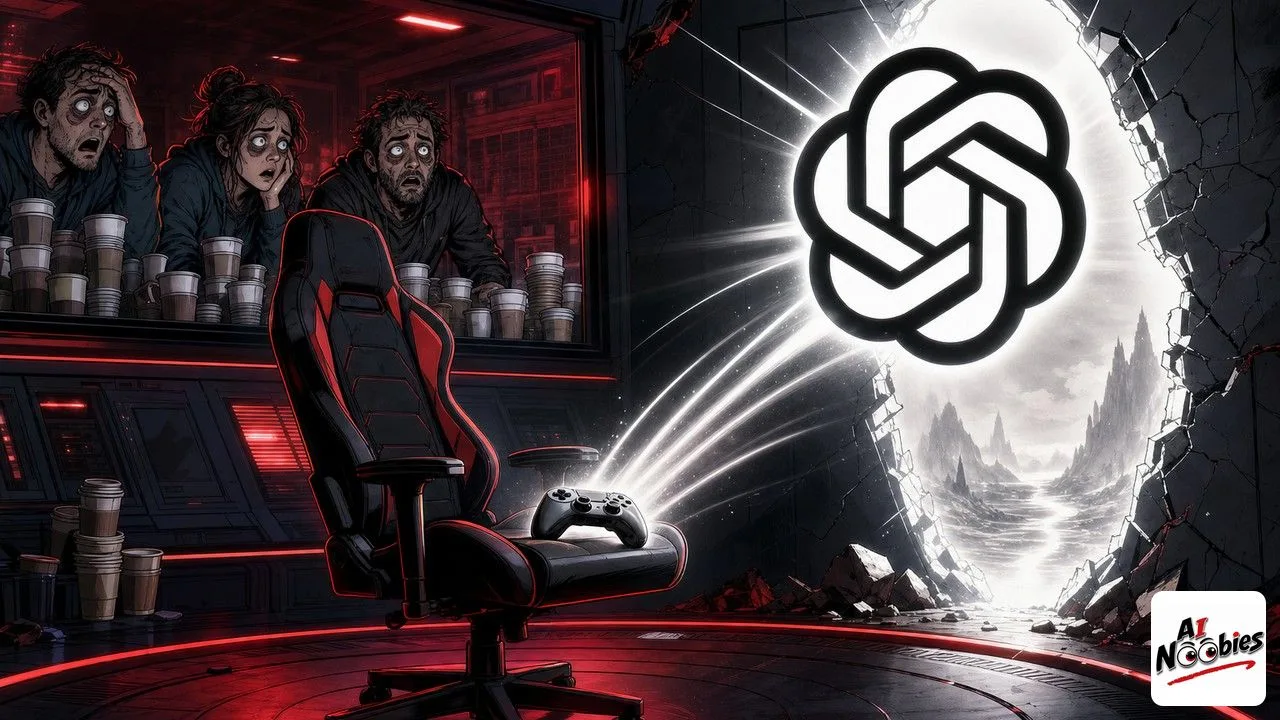
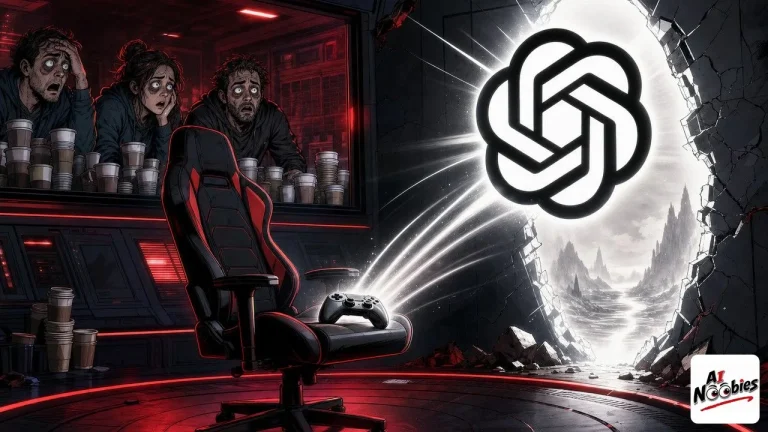
A developer left OpenAI’s newest AI, GPT-6 Astra, alone with a puzzle video game called Portal, and it played the whole thing to the end credits without any human help. The run took just under 24 hours and burned through about 571 dollars of computing time.
The Gist
- GPT-6 Astra finished the game Portal by itself in roughly 23 hours and 43 minutes
- Nobody touched the controls after the developer set the goal at the start
- The model looked at screenshots and typed its own commands, the same way a person plays
- The whole run cost around 571 dollars in computing fees
Have ChatGPT Recap This Article
ChatGPTMeet Portal, the puzzle game a machine just finished
Portal is a first-person puzzle game where you shoot two doorways onto walls and walk through one to come out of the other. It sounds simple and it is not, because solving a room means holding several steps in your head at once and picturing where you will land before you jump.
That is exactly why someone picked it for this experiment. A developer going by cozyblaze set GPT-6 Astra loose on the game and told it, once, to finish it. After that instruction, no human touched anything until the credits rolled.
The full run took about 23 hours and 43 minutes. The developer shared the result and the technical write-up on their own account, and published the code publicly so other people can check the work or repeat it.
This matters more than a fun weekend project because of what a game demands. Finishing Portal means seeing a problem, planning several moves ahead, and correcting course when a plan fails, over and over, for hours. Chatbots answer one question at a time, so a long unbroken run like this is a different kind of task.
How the model played, one screenshot at a time
Here is the part people usually get wrong. The AI did not read the game’s internal code or get handed a secret map, and it was not fed the solutions. It played from pictures, the same information your eyes get.
The setup used something called MCP, short for Model Context Protocol. That is simply an agreed way to let an AI model operate another piece of software, a bit like a universal adapter between a chatbot and an app.
The clever trick was a modified tool that pauses the game while the model thinks. During each pause, Astra receives a screenshot plus the player’s position and camera angle, decides which buttons to press, and then the game unfreezes and carries out that sequence.
That pausing detail explains the strange runtime. The model is not playing at human speed with lightning reflexes. It stops, studies a still image, works out what to do next, and only then acts, which is why a game most people finish in a few hours stretched across most of a day.
Keep learning on AI Noobies:
- AI for Small Business Starts With These Three Tasks
- Doctors Using AI Should Tell You, Most Americans Say
- Netflix GenRec Picks What You Watch Next
What tokens are, and why this cost 571 dollars
AI companies do not charge by the hour. They charge by the token, and a token is roughly a chunk of a word, so a short sentence might be fifteen or twenty of them. Every image the model looks at and every instruction it writes gets counted this way.
Now picture almost 24 hours of that. Thousands of screenshots examined, thousands of decisions written out, each one billed. At Astra’s standard rates the run came to at least 570 dollars, though the developer used a 200-dollar monthly subscription to soften the real bill.
For you, this is the number worth remembering. When you hear that an AI can now “do a whole job by itself”, the honest follow-up question is what that job costs to run, and right now long autonomous tasks are expensive. A free chatbot answering your question is a very different economic proposition from an AI working alone for a day.
That said, prices in this field have fallen fast and repeatedly. The developer’s own comment on the result was that this is the worst model we will ever have, meaning everything after it should be cheaper and better at the same task.
Where you will hear about this next
Games have been a public scoreboard for AI progress for a long time, and that is why this run travelled so far. Back in 2016 OpenAI set itself the goal of solving many different games with a single agent, and this is the clearest sign yet of that old target being reached.
Expect the argument to move quickly from games to work. The word you will keep hearing is agent, which just means an AI that carries out a series of steps rather than replying once, and you can already see it in consumer products: we covered that shift when the ChatGPT agent started doing tasks instead of chatting.
The same idea already runs quietly in the background for people who write software, where bots grind through work for hours unattended. If you want to see what that looks like in practice, our explainer on how AI loops let bots code while you sleep walks through the mechanic without the jargon.
Keep one thing in mind before you hand anything important to an agent. A model left alone for hours also makes mistakes alone for hours, and those mistakes are real: earlier this year an OpenAI model deleted some users’ files by accident. Finishing a video game is a controlled experiment where the worst outcome is a wasted afternoon, and your holiday photos are not.
The practical takeaway is smaller than the headline. Nothing about this changes what your chatbot does tomorrow, but it does tell you where the whole industry is pointing, and it gives you a fair question to ask whenever someone sells you an autonomous AI: how long can it work unsupervised, and what happens when it gets something wrong?
Stay tuned on AI Noobies.
About the Author


1 thought on “GPT-6 Astra Finished a Video Game on Its Own”