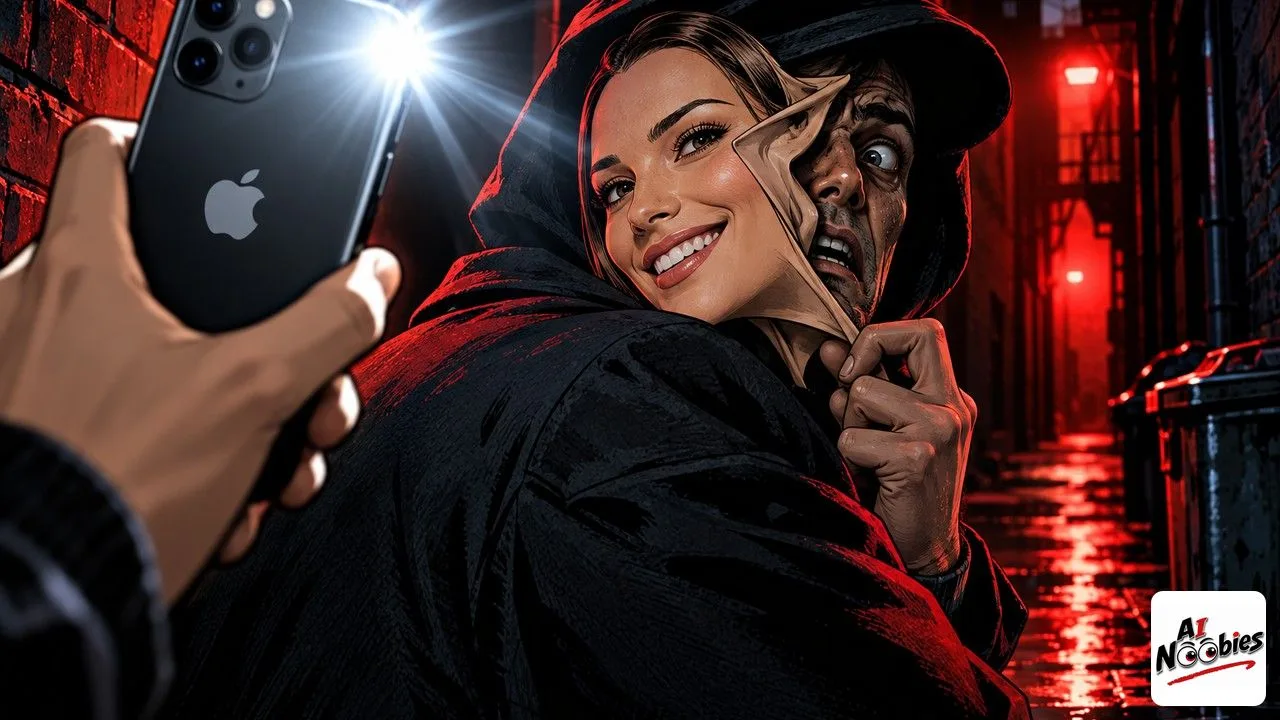
A deepfake is a photo, video or voice recording made or altered by AI so that a real person appears to say or do something they never did. This guide explains how deepfakes are made, what the jargon around them means, and the simple checks you can run before you believe, share or act on something suspicious.
The Gist
- A deepfake uses AI to put a real person’s face or voice into content they never actually made.
- Voice fakes are the easiest to produce today, because a short recording can be enough to copy how someone sounds.
- Visual clues like odd blinking, blurry mouths and mismatched lighting help, but they are getting harder to spot.
- The strongest defense is checking the source and calling back through a channel you already trust.
- New tools such as watermarks and camera-signed photos are starting to help prove what is real.
Have ChatGPT Recap This Article
ChatGPTContents
What a deepfake is, in plain words
How a deepfake gets made, from photos to fake voices
What face swaps, voice clones and watermarks actually mean
How to check a suspicious video or call this week
What a deepfake is, in plain words
Where does the word come from? It joins “deep learning”, the family of AI techniques that learns patterns from huge amounts of examples, with “fake”. Put simply, a deepfake is fake media built by an AI that has studied what a real person looks or sounds like.
The result can be a still image, a video or an audio clip. The classic example is a video where one person’s face has been swapped onto another person’s body, so a celebrity appears to give a speech they never gave. The same idea applies to voices: an AI copies how someone speaks and then reads out words that person never said.
Is every edited photo a deepfake? No. Cropping a picture, fixing the colors or adding a filter changes an image, but it does not put words in anyone’s mouth. A deepfake imitates a real person, and that is what makes it different from ordinary editing.
It is also different from an AI image of someone who does not exist. A made-up face generated for an advert can still mislead, but a deepfake borrows the identity of a real, recognizable person, and that borrowed trust is where the harm comes from.
Deepfakes are not always malicious. Film studios use similar technology to de-age actors, and some people clone their own voice on purpose to narrate a podcast or read a letter to family. The problem starts when the person being copied never agreed, or when the fake is used to trick someone.
The tricks tend to follow a few familiar patterns. A fake video of a public figure spreads a false statement. A fake voice of a family member asks for money in a hurry. A fake image of an ordinary person is used to embarrass or harass them. In each case, the goal is to make you react before you think.
That is the real reason a beginner should understand deepfakes. You do not need to become a forensic expert. You need to recognize the moment when a message is designed to rush you, and to know what to do in that moment.
The same applies at work. A message that seems to come from a manager, asking for an urgent payment or a password, is a classic setup whether or not a deepfake is involved. Adding a convincing voice or face to that old trick simply makes the pressure feel more real.
How a deepfake gets made, from photos to fake voices
What does someone need to make a deepfake? Mostly examples of the person being copied. For a face, that means photos or videos from different angles. For a voice, it means recordings of that person speaking. Public figures leave plenty of both online, which is why they are frequent targets.
The AI then studies those examples. It learns the shape of the face, how the mouth moves on certain sounds, how the voice rises and falls. Once it has learned enough, it can produce new frames or new audio that follow the same patterns, driven by whatever the creator wants the fake person to say.
Voice is the easiest place to start today. Consumer tools can copy a voice from a short recording, and we showed how simple the legitimate version is in our walkthrough on how to clone your own voice with ElevenLabs in under a minute. The same ease cuts both ways, which is why responsible services forbid cloning anyone without their permission.
Video takes more work, but it keeps getting easier. A face swap replaces the face in an existing video frame by frame. A lip-sync fake keeps the real video but changes the mouth movements to match new audio. Both can look convincing on a small phone screen, especially when the clip is short and compressed.
Images are the simplest of all. AI image tools can place a real person in a scene they were never in, with realistic lighting and background. A single convincing picture, shared at the right moment, can travel further than any correction that follows.
Why do fakes often feel believable even when something is slightly off? Because we tend to judge content by who seems to be in it. If the face and voice match someone we know, our brain fills in the rest, and small glitches get ignored.
On the flip side, the same technology is being used to fight back. Tech companies are building tools that mark AI-made content at the moment it is created, and others that prove a photo came straight from a camera. We will look at both in the next section.
Keep learning on AI Noobies:
- Meta Muse Calls US Businesses So You Don’t Have To
- Meta Muse Hit No. 2 on the US App Store in Two Days
- Apple Reference Image Proves Your Photo Is Real
What face swaps, voice clones and watermarks actually mean
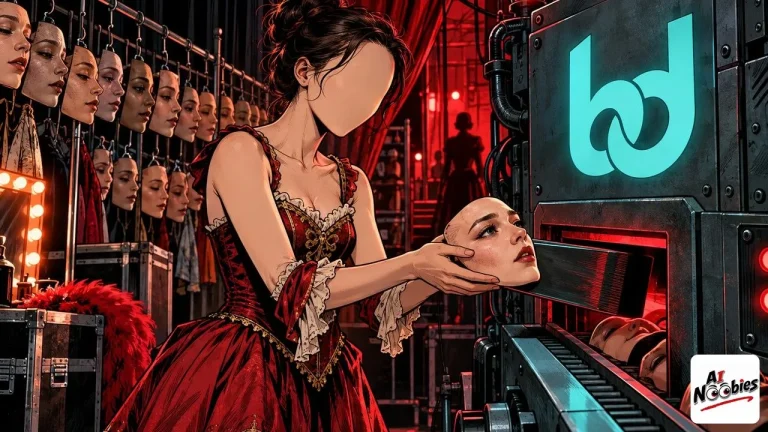
What is a face swap? It is a deepfake where one person’s face is placed onto another person’s head in a photo or video. The body, the room and the movement belong to the original footage, and only the face changes.
What is a voice clone? It is an AI copy of a real person’s voice that can read any text you give it. The legitimate version helps creators narrate their own content. The harmful version is the phone call that sounds exactly like your relative, asking for help.
What is a watermark, in this context? It is a hidden signal added to AI-made content so software can later recognize it as generated. You cannot see or hear it, but a detection tool can read it. Google, for example, adds an imperceptible watermark called SynthID to the audio produced by its newest voice models.
Watermarks have a limit worth knowing: they only work when the company that made the content added one. A deepfake made with a tool that skips watermarking will not carry any signal, so a missing watermark proves nothing on its own.
That is why the opposite approach matters too. Instead of marking what is fake, some tools prove what is real. Apple’s newest iPhones can sign a photo at the moment it is taken, which we explained in our piece on how Apple Reference Image proves your photo is real.
Put together, marking fakes and proving originals cover two ends of the same problem. Neither is everywhere yet, so for now your own habits remain the most reliable filter you have.
One more term you will hear is “cheapfake”. It describes misleading content made without advanced AI, such as a real video slowed down to make someone sound drunk, or a genuine photo given a false caption. It is worth knowing because the checks that catch a deepfake catch these too.
The nuance here is that AI tools themselves can also get facts wrong without anyone trying to trick you. A chatbot can describe an event that never happened, which is a different problem we covered in our guide to spotting the made-up facts ChatGPT sometimes produces. The same healthy doubt applies to both.
How to check a suspicious video or call this week
Where should you start when something feels off? With the source, before the pixels. Ask who posted it first, whether a trusted news outlet or the person’s official account shares it, and whether the claim appears anywhere else. A shocking clip that exists only on one anonymous account deserves suspicion.
Then look closely. In a video, watch the eyes and mouth. Blinking that looks unnatural, teeth and tongue that blur when the person talks, skin that seems too smooth, or shadows that fall the wrong way are all common signs of a fake. Pause the video and look at the edges of the face, where a swap often leaves a soft or flickering outline.
Listen closely too. A cloned voice can sound flat, with odd pauses, breathing in the wrong places, or a tone that does not match the emotion of the words. Background noise that cuts in and out is another clue. None of these signs is proof, but two or three together should slow you down.
Be honest about the limits of spotting. The best deepfakes today can pass a quick look and a casual listen, and they keep improving. Checking the source beats squinting at pixels, so treat visual clues as a bonus, not your main defense.
For phone calls, the golden rule is to hang up and call back. If a voice that sounds like your child, your parent or your boss asks for money or passwords in a hurry, end the call and ring them on the number you already have saved. A real emergency will survive a two-minute check.
A family code word helps with exactly this situation. Agree on a word or phrase with close relatives that only you know, and ask for it whenever a call feels strange. It costs nothing, takes one conversation to set up, and a cloned voice will not know it.
For images, a reverse image search is your friend. Search tools let you upload a picture and find where else it appears online. If the “breaking” photo turns up in an article from years ago, or in a different context, you have your answer.
Before you share, pause. Sharing a fake, even to ask “is this real?”, helps it spread. If you are unsure, it is better to look for a trusted source that has checked the content than to pass it on to your group chat.
If you do find a fake, report it. Social platforms let you flag impersonation and manipulated media from the menu next to a post, and every report helps moderators take it down faster. If the fake targets you or someone you know, save a screenshot and the link first, so you have a record to show the platform or the police.
Finally, protect your own face and voice a little. Every public video and voice note adds material someone could copy. You do not need to disappear from the internet, but it is reasonable to keep personal videos to private accounts and to think twice before posting long voice recordings publicly.
This week, try one small exercise. Set up a code word with one family member, and practice a reverse image search on a photo you saw shared recently. Those two habits alone put you ahead of most of the tricks built on deepfakes today.
Stay tuned on AI Noobies.
About the Author