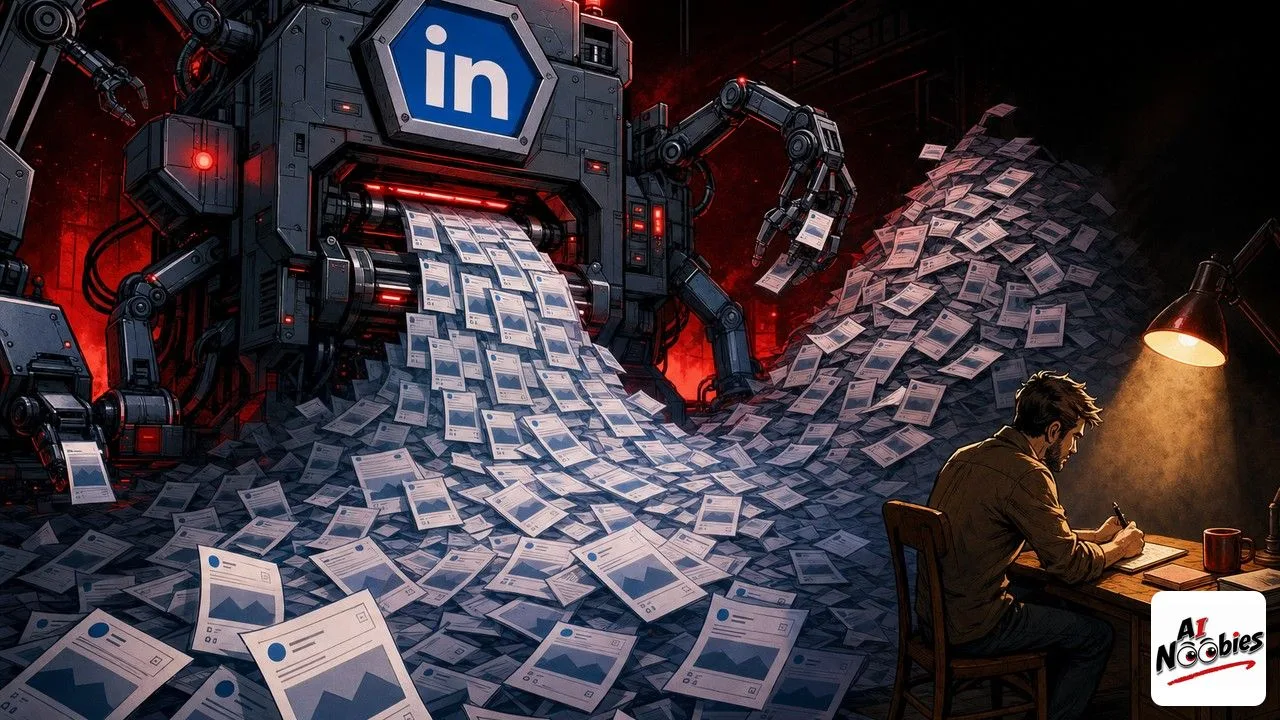
A new study scanned more than a million online posts and found that one in four long posts is now written by AI. The messiest platform was LinkedIn, and the cleanest was Substack, which tells you a lot about where to trust what you read.
The Gist
- A detection company scanned over a million posts across five platforms
- One in four posts longer than 250 words was flagged as AI-written
- LinkedIn was the worst at 41 percent, and X was close to half
- Substack came out cleanest at around 10 percent, with Reddit next at 13 percent
- Even the detector admits the true number could be higher
Have ChatGPT Recap This Article
ChatGPTMeet the study that counted the robots
The research came from a company called Pangram that builds tools to spot AI writing. Between April and June, it used a browser add-on to scan more than a million posts across five big platforms.
The headline number is the one to remember. Across those platforms, one in four posts over 250 words looked AI-written, so on a normal scroll, a real chunk of what you read was typed by a machine.
The gap between platforms was huge. LinkedIn topped the list at 41 percent of long posts, X sat close to half, Medium landed at 31 percent, and Reddit came in near 13 percent.
Substack was the cleanest at around 10 percent. That fits its shape as a place people write newsletters in their own voice, while LinkedIn rewards a steady stream of polished posts, which is exactly the job people hand to AI.
How a tool guesses if a human wrote something
So how does a detector decide? It does not read minds. It looks at patterns, the little habits of word choice and rhythm that AI models fall into more than people do.
That makes it a smart guess, not a certain verdict. Pangram says it flags a human as AI only about once in ten thousand times, which is careful, and yet the company admits it is better at spotting humans than at catching every AI text.
That admission matters for how you read the study. If the tool misses some AI writing, then the real share is probably even higher than the numbers say, not lower.
It is the same lesson beginners learn about trusting AI text in the first place, the way a chatbot can state a made-up fact with total confidence. A confident tool can still be wrong, whether it is writing or judging.
Keep learning on AI Noobies:
- Gemini 3.6 Flash Is Google’s Cheaper, Faster AI
- What an AI Agent Really Is, in Plain Words
- What an Open-Weight AI Model Really Means
Why the cleanest and messiest feeds differ so much
What does this change for you? Mostly it tells you how much salt to add when you scroll a given app.
On a feed that is nearly half AI, a glowing post or a too-smooth take is worth a second look before you believe it or share it. On a quieter platform, the odds that a person actually wrote what you are reading are simply better.
There is a bigger question underneath. As more of the internet fills with machine text, platforms are under pressure to label what is AI, the same push that led YouTube to stamp labels on AI videos, and this study is fuel for that debate.
It also touches trust in a quiet way. When you cannot easily tell a person from a program, the value of a clearly human voice goes up, which is part of why the cleanest platforms may start to advertise it.
How to train your own eye for AI writing
You do not need a detector to get sharper at this. Start by noticing tone: AI writing often sounds evenly upbeat and a little generic, with tidy lists and no rough edges.
Watch for empty confidence too. A post that makes big claims with no specific detail, no personal story and no clear source is the kind of smooth filler these models produce by the ton.
Then test yourself for a week. Guess AI or human before you check any label, and you will slowly build the instinct that no tool can hand you, which is your own read on whether a real person is talking to you.
Stay tuned on AI Noobies.
About the Author