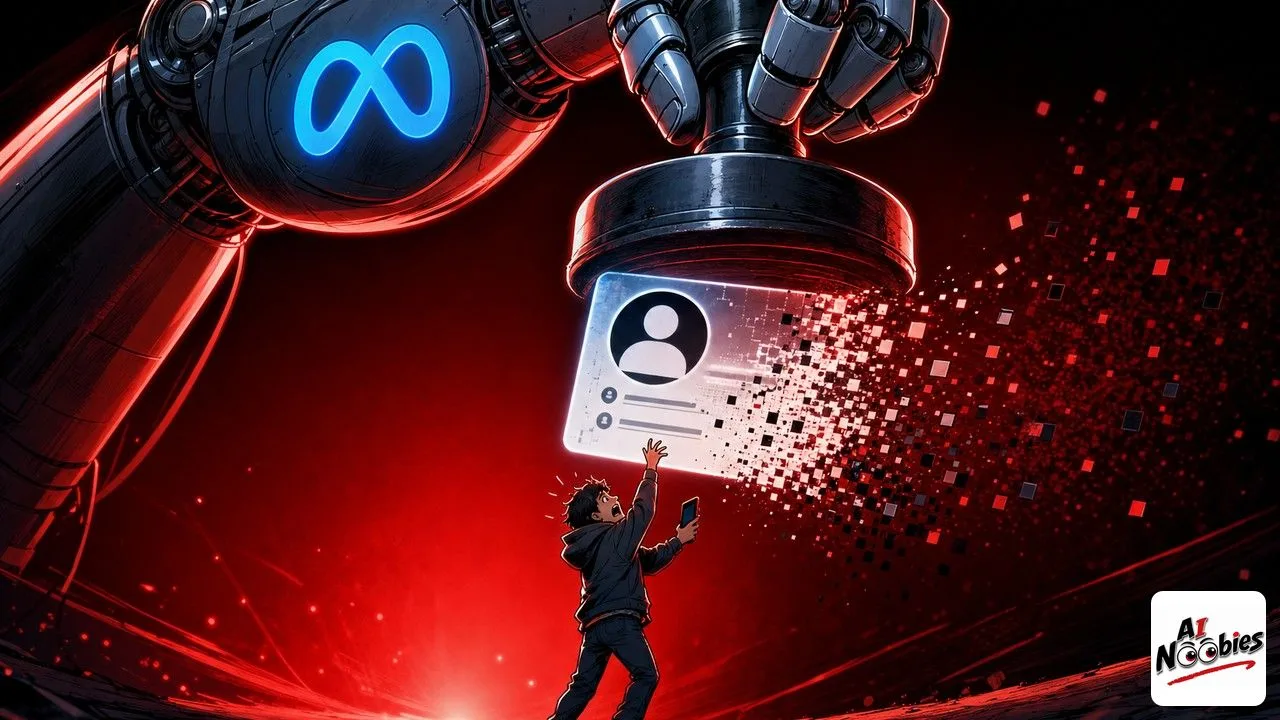
Meta, the company behind Facebook, Instagram and WhatsApp, now lets an AI decide whether your posts and even your whole account get taken down. It says the system makes fewer mistakes than people, while its own staff warn it still hides and deletes things it should leave alone.
The Gist
- Meta now runs most of its content moderation with an AI instead of people
- It switched to its own model, called Muse Spark, to do the checking
- Meta says the AI makes 13 percent fewer errors than humans and catches 10 percent more rule-breaking
- Its own employees warn the AI still hides or removes harmless posts
- The human reviewers who used to do this work are losing their jobs
Have ChatGPT Recap This Article
ChatGPTMeet the AI that now polices your feed
Content moderation is just the job of checking posts against the rules and removing the ones that break them. For years, armies of people did this work by hand.
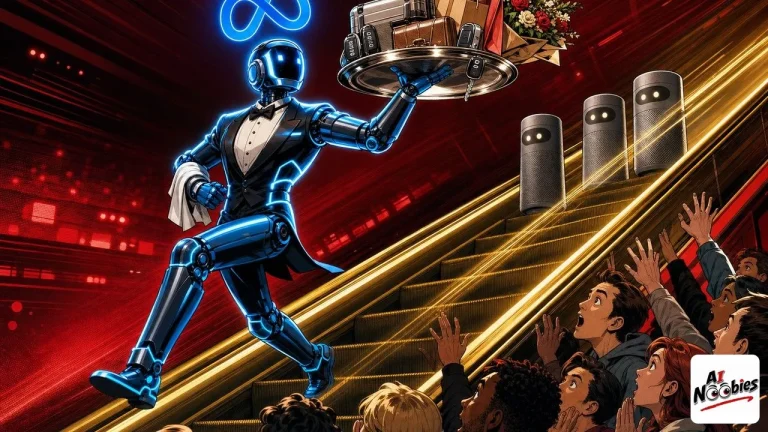
Now Meta hands most of that job to an AI. It swapped in its own model, called Muse Spark, the same in-house system Meta has been building into its apps, which you may know if you saw that Muse Spark already reaches into the tools you use.
The scale is the part that catches you off guard. Meta already ran about half of its moderation through AI last year, and it wants to push that past 90 percent for some kinds of content by the end of this year.
So the thing deciding whether your photo, comment or account survives is, more and more, a piece of software rather than a person reading it.
What a shadow-ban is, in plain words
One word keeps coming up here, and it is worth knowing: shadow-ban. A shadow-ban is when a platform quietly hides your post so almost nobody sees it, without ever telling you it happened.
You still see your own post, so everything looks normal from your side. Behind the scenes, the reach has been cut, which is why a shadow-ban is so hard to notice and so frustrating to fix.
This is exactly what Meta’s own staff are worried about. Employees warn the AI still removes or shadow-bans harmless content, and that the rollout is moving faster than the checks meant to catch its mistakes.
It is the same trust question raised by Meta’s other AI features, like the way its AI pulls from your public information across its apps. The tools get more powerful, and the room for a quiet mistake grows with them.
Keep learning on AI Noobies:
- Gemini 3.6 Flash Is Google’s Cheaper, Faster AI
- What an AI Agent Really Is, in Plain Words
- What an Open-Weight AI Model Really Means
Why an accurate AI can still get you wrong
Meta leans on one number to reassure people: since March, it says the AI makes 13 percent fewer errors than humans while catching 10 percent more violations. On paper, that sounds like a clear win.
Here is the catch a beginner should hold onto. Meta handles billions of posts, so even a tiny error rate still means a huge number of real people get the wrong call, and a better average is no comfort if you are the one wrongly removed.
That is what changes for you day to day. A single misread caption could hide your post or freeze the account you use for your side business, and the human you would normally appeal to may not be there anymore.
There is a wider debate riding on this too. As platforms replace reviewers with software, watchdogs are pushing for the right to know when an AI penalized you and to reach a real person, and this is the fight you will hear more about in the months ahead.
How to protect your account if the AI slips
You cannot stop Meta from using AI, but you can lower your odds of a bad surprise. Start by keeping your own copies of anything that matters, like photos, client messages or posts tied to your work.
Next, set up your recovery options now, while your account is healthy. A confirmed phone number, a backup email and any official verification give you a real path back if the system locks you out by mistake.
Finally, if something disappears, look for the appeal button and use it calmly rather than posting the same thing again. Reposting can look like a second violation to the AI, which is the fastest way to turn one mistake into a bigger one.
Stay tuned on AI Noobies.
About the Author