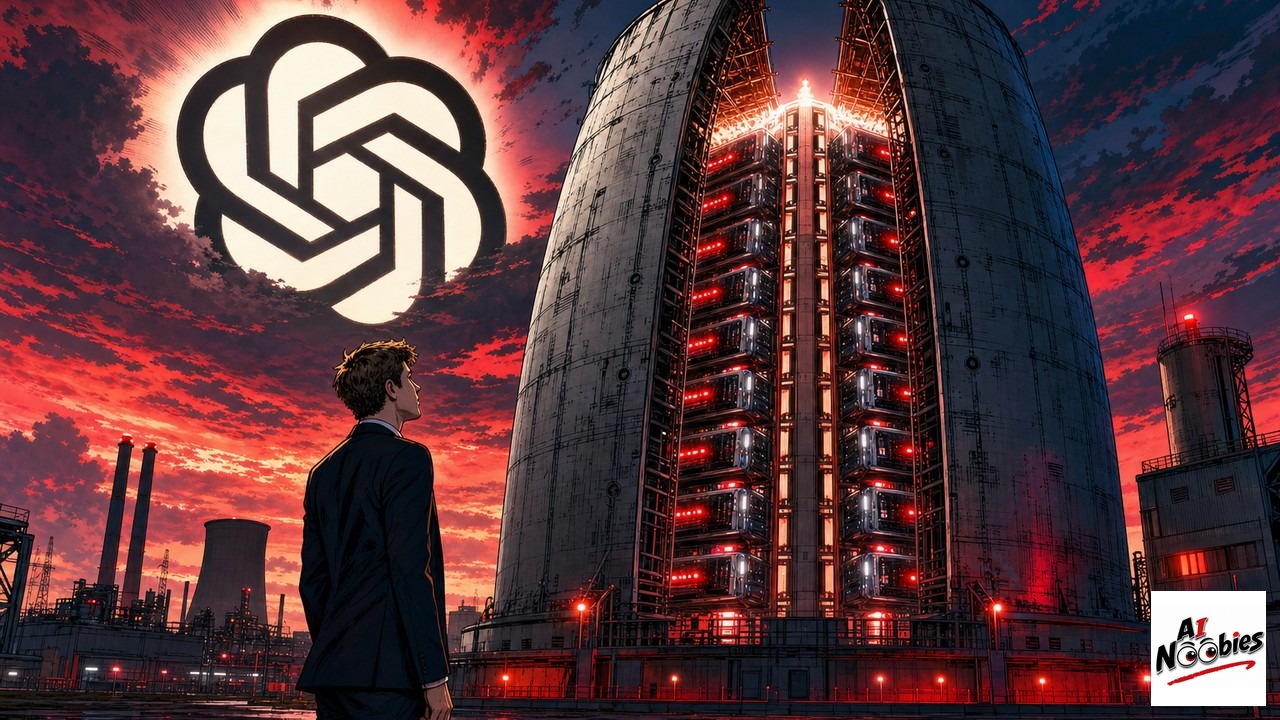
The new OpenAI Ohio data center will hit 10 gigawatts at full buildout. The bill starts at $500 billion. Nvidia would back the lease with its own balance sheet, in what is shaping up to be the most expensive AI infrastructure bet ever announced.
The Gist
- OpenAI plans a 10 GW data center in southern Ohio.
- Nvidia would guarantee the lease and the project financing.
- First phase of 800 MW expected to come online in 2028.
What we know about the project
The OpenAI Ohio data center is the biggest infrastructure commitment the company has ever made. The site will reach 10 gigawatts of capacity at full buildout. For context, that is enough power to light up a major city, dedicated to running AI models.
The location is precise. The campus will sit on federal land in Pike County, southern Ohio, on the site of a former uranium enrichment facility. That history matters because the existing infrastructure makes the site faster to power and connect than starting from scratch.
The first phase will deliver 800 megawatts. That milestone is targeted for 2028, which is the earliest plausible date given how long heavy industrial buildouts take in the United States. Full buildout will stretch over the 20-year lease OpenAI has signed.
The minimum total cost sits at $500 billion. That number covers construction, power infrastructure and the GPU servers that will fill the site over the years. It is also a floor, not a ceiling. Projects at this scale tend to slip up, not down.
The developer on the ground is SB Energy, majority-owned by SoftBank. SoftBank is already a major OpenAI investor, so this keeps the financing loop tight inside the same family of stakeholders. The Information first reported the details, and negotiations are still ongoing.
Why Nvidia is the key signature
The financial trick of this deal is Nvidia. The chipmaker would serve as financial guarantor, backing both the lease and the project financing with its balance sheet. For people new to this, that means Nvidia puts itself on the hook if OpenAI cannot pay.
This is new ground for Nvidia at this scale. The company has financed AI projects before, but never with a guarantee anywhere close to half a trillion dollars. Lenders and developers needed that signature to make the math work for a project of this size.
The logic for Nvidia is straightforward. The Ohio site will run on Nvidia chips, which means every dollar OpenAI spends turns into a Nvidia revenue line. Guaranteeing the lease is essentially Nvidia funding its own demand for the next decade.
The Stargate connection matters here. The project echoes the Stargate initiative announced at the White House in January 2025, with Oracle and SoftBank as initial partners. Stargate has only made limited progress since then. Ohio looks like Stargate version 2, with Nvidia stepping in to fix the financing.
The timing also lines up with the company’s IPO push. OpenAI confidentially filed IPO paperwork on the same Monday this deal was reported. We covered the background in our explainer on the Anthropic confidential IPO, and OpenAI is now playing the same playbook with more infrastructure firepower behind it.
Keep learning on AI Noobies:
- Deezer AI music detector flags Spotify and Apple too
- AI spending hits $7,500 per employee at top firms
- Claude Fable 5 builds a video game from one prompt
What it changes for the AI you use
If you use ChatGPT or any OpenAI product, the OpenAI Ohio data center is the answer to a problem you may have felt. Slow replies on certain queries, capacity limits at peak hours, paywalls on heavy features. All of that comes from infrastructure shortage.
In the short term, the announcement does not change your daily usage. The first 800 MW phase only comes online in 2028, and Ohio’s main effect on consumer features will start landing around 2029. The win between now and then is more capacity to train the next generation of models behind the scenes.
In the medium term, this kind of scale shifts what AI products can plausibly promise. Real-time agents working on long tasks, video generation at higher resolution, voice interactions without delay. None of that is free of compute, and Ohio is OpenAI’s bet to secure enough of it.
There is also a political layer. The site sits on federal land, with a government willing to fast-track AI infrastructure, as we saw with the discussion around a possible White House equity stake in OpenAI. The deal could become a template for other AI campuses on public land.
For everyday users, the takeaway is simple. The OpenAI Ohio data center is the kind of project that fixes the constraints you feel today and unlocks features you do not have yet. The bet is huge, the timeline is long, and the signal it sends to the rest of the industry is even bigger.
Follow the story on AI Noobies.
About the Author