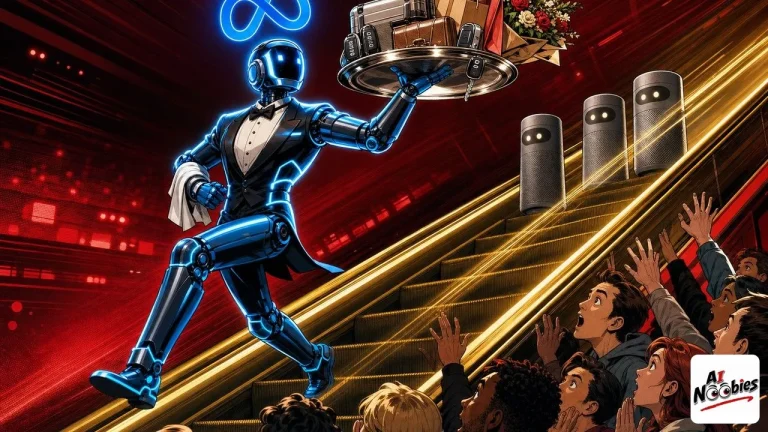
Spotify just added a voice and text assistant inside its app, and you can ask it out loud for new artists, mood shifts, or the story behind a song. The beta is open to Premium subscribers over 18 in the US, Ireland and Sweden, and it works in English only for now.
The Gist
- Spotify launched a conversational assistant on July 14 in the iOS and Android app.
- You can talk to it or type, and it can find music, tweak your queue, save songs, and answer questions about your listening history.
- It only works in English, only for adult Premium subscribers, and only in the US, Ireland and Sweden for the moment.
Have ChatGPT Recap This Article
ChatGPTMeet the New Spotify Assistant, in plain words
Spotify already had an AI DJ, the voice that introduces you to a personalized flow while you listen. The new thing is different: it is an assistant you can talk to back. You open the app, tap the icon, and either speak or type what you want. The assistant answers in the same conversation.
The whole point is that you no longer have to swipe through playlists or type keywords in a search bar to change what you are listening to. You can say something like “play something upbeat but not too loud, and add three tracks from last month”. The assistant picks the songs and queues them.
Two important limits at launch: it only speaks English, and you need to be 18 or older with a Premium subscription. If you are on the free Spotify plan, or if you live outside the US, Ireland or Sweden, the feature is not yet available. The Premium and geography lock is expected to loosen over the coming months, but Spotify has not shared a public schedule yet.
How the new assistant actually works when you use it
The assistant lives inside a dedicated section of the app. Tap the icon, and a chat interface opens on top of your regular music player. You choose to talk or to type. Then the conversation stays inside Spotify, with the assistant already knowing your listening history, your saved songs and your current queue.
Some things you can already do in a first conversation: “play some artists I have never listened to”, “narrow it down to French pop from the last two years”, “save this song for later”, “follow this artist”, “add three more tracks like this one to the queue”, “tell me when this album came out and what it is about”. Each of these turns into a real action inside the app.
You can also ask why the assistant picked a song. If you say “why did you play this one”, the assistant tries to give a plain-English reason: “it fits the mood you asked for and this artist wrote for the band you follow”. This kind of explainability is what most people wish they had from Netflix or YouTube recommendations, and Spotify is quietly the first big consumer app to ship it in dialogue form.
Keep learning on AI Noobies:
- The New Siri Is Now Open to Every iPhone in the Beta
- ChatGPT for Grandparents: 4 Everyday Uses Worth Trying
- 16 Nobel Winners Ask the World to Prepare for AI
What “third-party models” and “Premium beta” really mean here
Spotify says the assistant runs on a mix of its own AI and models from other companies. In plain words, Spotify picks the best AI brain for each task instead of using one single provider for everything. Third-party models are the AI systems built by outside companies, like the ones that power ChatGPT or Claude. Spotify does not say publicly which providers it uses, only that it uses several.
“Premium beta” means two things stacked together. Premium is the paid Spotify plan that removes ads and gives higher audio quality. Beta is a test version of the assistant, so it may make mistakes, may respond slowly at times, and will keep improving as Spotify collects feedback. Being in the beta means you get access early, but nothing is fully polished yet.
Zooming out, this launch fits a bigger pattern. Every consumer app you use daily is racing to add an AI assistant inside itself. Apple did it with Siri in the new iOS 27 beta. Google is baking Gemini into Search and Maps. Meta is pushing Muse in WhatsApp and Instagram. Spotify does not want to be the app you leave to open ChatGPT when you want music suggestions. So it puts the assistant right where you are already, which is exactly the same reason the 5 free AI chats every beginner should know now feel like they overlap with each other more and more.
How to try Spotify’s assistant on your phone this week
Step one: check if you are Premium, over 18, and in the US, Ireland or Sweden. If not, you are locked out for now. Step two: open the Spotify app on iOS or Android and update it to the latest version from the App Store or Google Play. Step three: look for a new icon or tab labeled around “AI Assistant”, “Ask Spotify”, or a chat bubble icon inside the home page. If you see it, tap it and start.
A handful of prompts that show off the assistant in one minute: “play music for a Sunday morning coffee”, “add three tracks similar to my most played artist this month”, “narrow it down to French artists”, “save the current track”, “tell me the story behind this album”, “queue five songs I have never played before”. Each prompt hits a different capability.
If you already use ChatGPT for music suggestions, the difference is that Spotify’s assistant knows your account. ChatGPT can suggest ten great songs, but it does not know which ones you already play on repeat, which artists you skip, or whether you saved a track last week. The Spotify assistant does. That personal context is the real reason to try it, even if you already have a chatbot habit elsewhere. It also lines up with the reflex a lot of new users pick up when they first play with AI, similar to what grandparents doing everyday tasks with ChatGPT discovered when the assistant suddenly knew things it did not know before.
One last practical note. The beta will improve week by week as Spotify feeds it more feedback. Some early sessions may feel slow or occasionally clumsy on song matching. That is normal for a beta. If you use the feature, you are also helping Spotify make it better before it ships in a stable version and expands to more countries and languages.
Stay tuned on AI Noobies.
About the Author