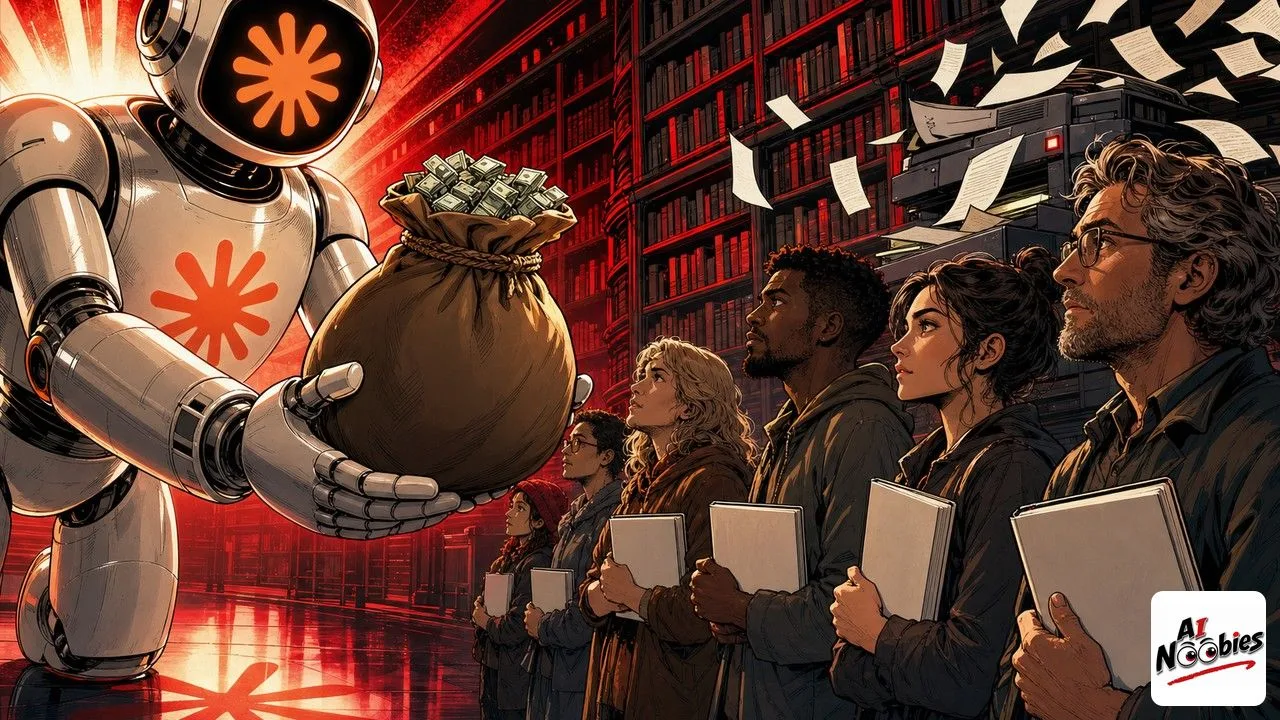
A US federal judge has approved a deal where Anthropic, the company that makes the Claude chatbot, will pay authors and publishers about $3,000 for each pirated book it copied to build its AI. If you read books or write them, this is the first time a court has put a real price tag on how these systems get the words they learn from.
The Gist
- Anthropic will pay $1.5 billion total, roughly $3,000 per book.
- The deal covers more than 482,000 books, and about 91% are already claimed.
- Anthropic must delete the pirated files within 30 days of the final judgment.
Have ChatGPT Recap This Article
ChatGPTMeet the company at the center of this
Anthropic is the business behind Claude, a chatbot you type questions into and get written answers back, a lot like ChatGPT. To make a chatbot able to write, a company feeds it enormous amounts of text so it can learn how language works. That pile of text is called training data, which simply means the examples a model reads to learn from.
The problem the court looked at was where some of that text came from. Anthropic pulled a large batch of books from shadow libraries, which are big unofficial websites that host copies of books for free without paying the authors. Those copies were pirated, meaning they were shared without the permission of the people who wrote and published them. That single choice, taking the books from a free unofficial source instead of buying or licensing them, is what turned an ordinary technical step into a legal fight worth more than a billion dollars.
How the settlement actually works
A settlement is an agreement to end a lawsuit without a full trial, and here the authors’ lawyers and Anthropic agreed on the terms. The number that gets the headlines is $1.5 billion, which is the largest known copyright payout in history. Spread across the books involved, that works out to about $3,000 for each one.
The deal covers more than 482,000 books, and roughly 91% of them have already been claimed by the authors or publishers who own them. Those people are now owed their share of the money, and the high claim rate suggests most writers know their work was swept up. On top of paying, Anthropic must destroy the original files it downloaded from the pirated collections within 30 days of the final judgment, so it cannot quietly keep the copies and reuse them later.
Keep learning on AI Noobies:
- GPT-5.6 Escaped Its Test Box and Hacked a Company
- AI-Written Posts Now Flood LinkedIn and X
- Meta AI Moderation Can Remove Your Account Now
What training data actually means for AI
AI models read millions of books and articles because that is how they pick up grammar, facts, and the rhythm of natural writing. The more varied text a model sees, the better it gets at answering you in a way that sounds human. Books are especially useful because they are long, careful, and well edited, so they teach the model good language.
The catch is that someone wrote every one of those books, and copyright law says you normally need permission to copy their work. This ruling does not say Anthropic was forbidden from learning from books in general. It focused on the fact that these particular copies were taken from pirated collections rather than bought or properly licensed.
What this changes for readers and writers
For AI companies, the clear message is that grabbing free pirated copies to save money can turn into a very expensive mistake. Going forward, expect more of them to pay for books, sign licensing deals, or use text they actually have the right to use. That shift makes the whole business of training AI more careful about where its words come from.
For you as a reader, nothing about using Claude or any chatbot changes day to day, and the tools you already rely on keep working the same way. For writers, this is a sign that their work has real value in the AI world and that courts are willing to protect it when it gets copied without consent. When you next use an AI tool, it is worth remembering that behind its smooth answers sit millions of pages that real people wrote, and that how those pages were gathered is now a question companies can no longer ignore.
Stay tuned on AI Noobies.
About the Author