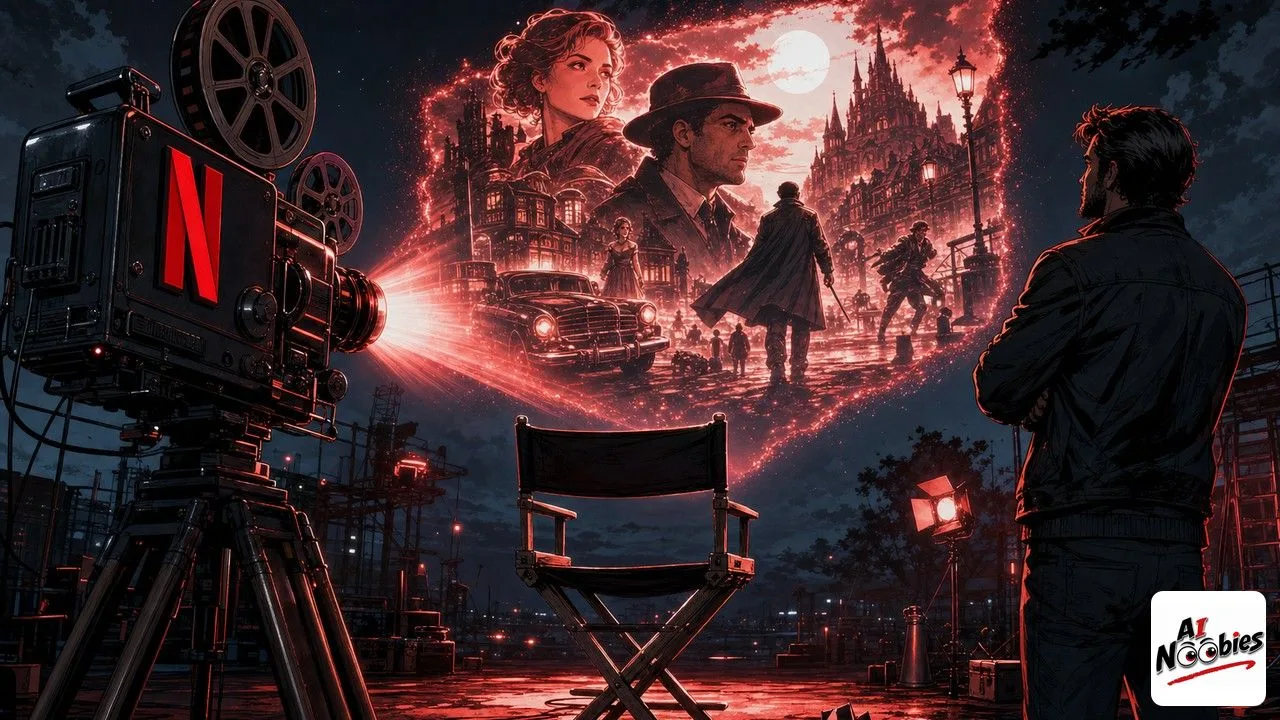
Netflix paid 587 million dollars in cash for InterPositive, an AI company co-founded by the actor and director Ben Affleck. Its software repairs film footage after shooting is finished, which is a job that used to take teams of people weeks.
The Gist
- Netflix bought InterPositive for 587 million dollars in cash.
- The tools fix missing shots, replace backgrounds and correct bad lighting.
- The whole InterPositive team joined Netflix, and Ben Affleck became a senior advisor.
- Around 300 Netflix titles have already used generative AI somewhere in production.
Have ChatGPT Recap This Article
ChatGPTMeet InterPositive, the studio Netflix just bought
InterPositive is a small company that builds AI tools for filmmakers. Its co-founder is Ben Affleck, who you probably know as an actor and director rather than as someone who runs a software business.
Netflix paid 587 million dollars for it, and paid the whole amount in cash. To put that in perspective, that is roughly what a large streaming service spends producing a handful of big-budget films.
The deal was first announced back in March. The price only became public later, when Netflix filed the figure in a regulatory document dated the 30th of June.
Everyone at InterPositive moved over to Netflix, and Affleck took a role as senior advisor. When he announced the deal, he said he wanted to protect the power of human creativity, which is a striking line coming from someone selling an AI company to a streaming giant.
How AI fixes a shot that was never filmed
Here is the part worth understanding, because it explains the price tag. InterPositive’s tools work on post-production, which is everything that happens to a film after the cameras stop rolling.
Three specific problems come up again and again on a film set. A shot is missing because there was no time to film it. A background is wrong because the location did not match the script. The lighting is off because a cloud passed at the wrong moment.
Traditionally each of those meant either reshooting the scene, which is expensive, or having artists fix it frame by frame, which is slow. The AI does the same repair work without either the film crew or the weeks of manual effort.
That said, this is not the same thing as an AI inventing a whole film. The system starts from footage that real people shot on a real set, and it patches the gaps in it.
Netflix is not experimenting here either. Around 300 titles on the service have already used generative AI somewhere in their production, a scale we covered when the number of Netflix shows touched by AI first came out.
Keep learning on AI Noobies:
- Gemini’s Big Update Is Running Late Again
- Kimi Is the Free Chinese AI That Rivals ChatGPT
- Netflix AI Is Now Behind Around 300 Shows
What post-production and generative AI actually mean
Two terms keep coming up in this story, and they are easy to mix up. It is worth separating them once.
Post-production is a stage, not a technology. It covers editing, sound, colour correction and visual effects, and it has existed since long before computers. What changed is who does that work.
Generative AI is the technology. It means software that creates new content rather than just adjusting what exists, so it can produce a background that was never photographed instead of stretching one that was.
Zooming out, the wider argument that has followed this story is about labour, not quality. Post-production is where a lot of skilled entertainment jobs live, and each repair the software absorbs is one fewer person needed on that task.
You will hear more of this debate in the coming months, especially around who gets credited and who gets paid. Similar questions came up with an Amazon project making animated shows with AI, and the disclosure side of it surfaced when YouTube introduced labels for AI-generated video.
How to spot AI touch-ups in what you watch this week
The honest answer is that most of the time you will not notice, and that is the entire point of the technology. Good post-production is invisible by design.
There are still a few places to look. Backgrounds behind actors in wide shots sometimes lack the small imperfections a real location has, and lighting on a face occasionally sits slightly apart from the light in the rest of the frame.
For you as a viewer, the practical change is mostly invisible and mostly financial. Cheaper repairs mean studios take more risks on smaller productions, so you may end up with more titles rather than obviously different ones.
Try one small experiment this week. Pick a recent series, watch a single scene twice, and pay attention only to the background the second time. It is a good way to train your eye on what the industry now considers routine.
Stay tuned on AI Noobies.
About the Author