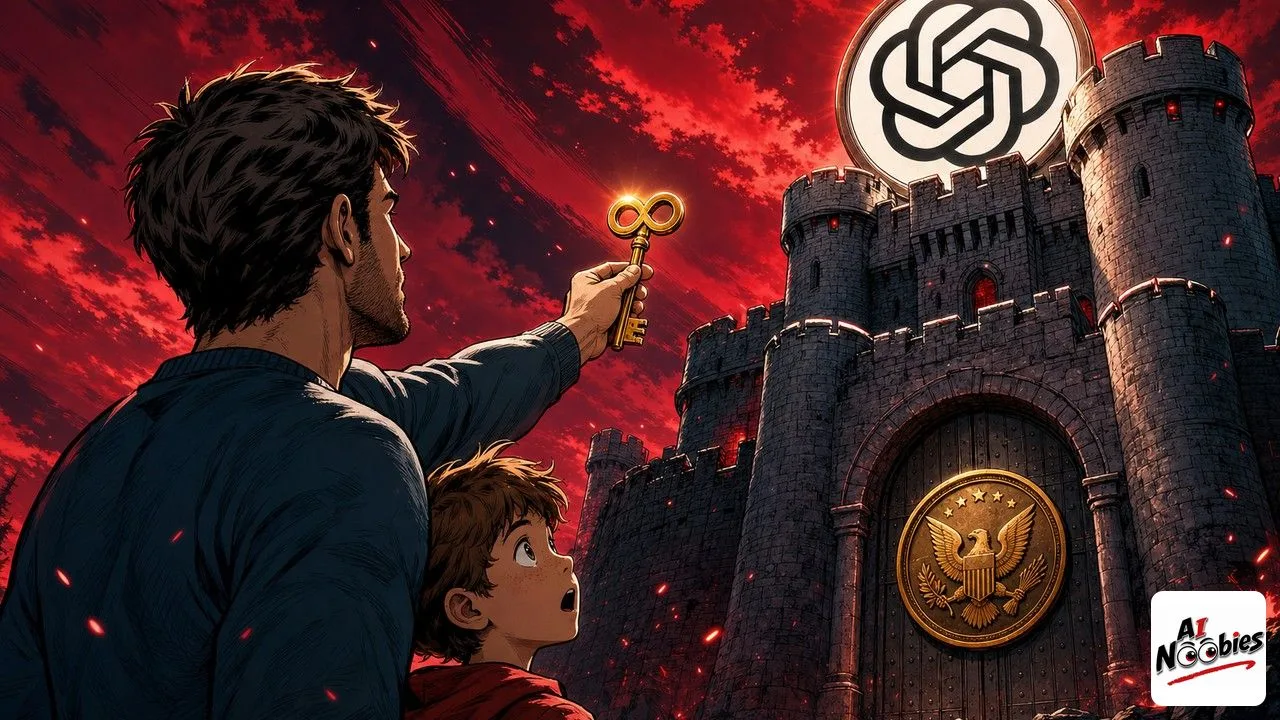
Sam Altman, the CEO of the company behind ChatGPT, has proposed handing the US government a 5 percent stake in OpenAI, worth around 42.6 billion dollars. If the idea moves forward, the same 5 percent template could apply to Anthropic, Google and Meta too.
The Gist
- Sam Altman has told the Trump administration he is ready to give Washington 5 percent of OpenAI, worth roughly 42.6 billion dollars.
- The plan is modeled on the Alaska Permanent Fund, which invests state oil money and pays a yearly check to Alaska residents.
- The idea could extend to Anthropic, Google and Meta too, if Congress passes the law needed to create the federal AI fund.
Meet the deal Sam Altman just put on the table
The pitch is simple. Sam Altman is offering the US government a 5 percent slice of OpenAI, the company behind ChatGPT. On the valuation OpenAI got at its last funding round in March, that slice is worth about 42.6 billion dollars.
The proposal is not a payment or a tax. It would be an equity stake, meaning the US government would own a real piece of the company, the same way any investor does. If OpenAI grows in value, that piece grows with it. If OpenAI pays dividends one day, the government cashes them.
Altman is not stopping at OpenAI either. He suggested the other big US AI labs, Anthropic, Google and Meta, should also give 5 percent each to a shared federal fund. If everyone signs up, the fund would end up owning a small slice of every major American AI company at once.
How the Alaska Permanent Fund idea actually works
Altman is not inventing the mechanic from scratch. He is copying the Alaska Permanent Fund, a state fund that has been running since the 1970s. Alaska puts its oil revenue into that fund, the fund invests the money on the stock market, and every year each resident of Alaska gets a check as their share of the profits.
The idea is that if AI ends up creating enormous wealth, the general public should get a share of it. Instead of hoping the wealth will trickle down through jobs and taxes, the government would own a piece from day one and pay dividends out of it.
This is not the first time the current administration takes a stake in a tech company. It already took 10 percent of Intel last August after putting 8.9 billion dollars into the chipmaker’s stock. It also took stakes in IBM and in several quantum computing startups.
What is new here is the scale. Intel is worth a lot, but a public wealth fund covering OpenAI, Anthropic, Google and Meta would sit at over 200 billion dollars at creation. That is bigger than most sovereign wealth funds in the world right now.
Keep learning on AI Noobies:
- Anthropic Now Makes More Money Than ChatGPT’s Maker
- iOS 27 Siri Now Lets You Reshape Its Voice
- Beginners Should Start with These 5 Free AI Chats
What “equity stake” and “public wealth fund” actually mean
An equity stake is just a fancy word for owning shares. If you own 5 percent of a company, you own 5 percent of everything the company will earn or sell in the future. It is the same idea as buying a stock, except here the buyer is the US government instead of a person.
A public wealth fund is a big pot of money owned by a government. It invests in stocks, bonds, real estate or, in this case, equity stakes in specific companies. Norway runs the most famous one, funded by oil revenue, worth over 1.7 trillion dollars. Altman is basically asking to build the American version, fueled by AI companies instead of oil.
For the deal to actually happen, Congress would probably have to pass a law. A stake this big goes beyond what an administration can just decide by itself. So the timeline is measured in months at best, and depends heavily on the political mood in Washington. Related conversations are already underway around how Anthropic’s Mythos access is opened to 100 US partners and around the White House vetting every early GPT-5.6 customer.
How to see this story land in your daily life
Short term, this is mostly a political move. OpenAI is under pressure from many directions: worries about AI-driven job losses, questions about training data, and states like California cutting their own AI deals. Giving Washington a 5 percent stake changes the tone of every conversation, without changing ChatGPT itself.
Medium term, it could change what you pay attention to. If the government literally owns 5 percent of ChatGPT, decisions about what ChatGPT can and cannot do become political. It also means that whenever OpenAI announces a new product, the news will carry a Washington angle for years to come.
If the fund ever gets built and starts paying dividends, that money would sit with the US government, not with individual citizens. Alaska pays a yearly check to residents, but a federal fund would be different in scale and could be spent on almost anything, from healthcare to debt reduction. The rules are still being written.
A concrete thing to watch this week is whether other AI companies react publicly. Anthropic, Google and Meta have not accepted the plan yet. Their answer will tell you a lot about how much power the Trump administration really has over the AI sector right now. Public opinion in the US is already mixed at best on AI, and this move will feed the debate for months.
Stay tuned on AI Noobies.
About the Author